Ghana’s COP31 Challenge : Turn China-Africa Green Pledges Into Projects That Can Be Financed
Ghana is pressing for a practical route from China-Africa climate commitments to financeable projects. The hard work is project preparation, affordable capital and clear local benefits.
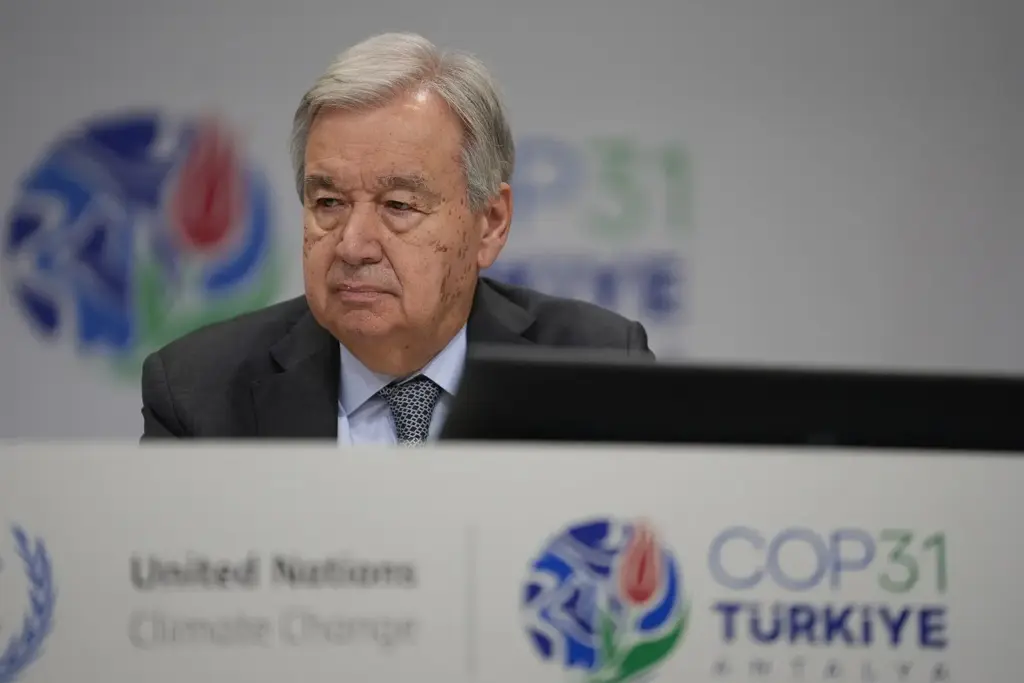
Ghana has put a practical question at the centre of its climate diplomacy at COP31: how do international green-development commitments become projects that can attract finance and deliver measurable results in African communities? At an engagement in the Ghana Pavilion in Antalya, Minister of State for Climate Change and Sustainability Seidu Issifu urged African countries and China to move beyond broad commitments toward affordable financing and investment-ready projects. The emphasis is significant because the distance between a political pledge and an operating power plant, resilient water system or climate-smart value chain is often measured in years of project preparation.
Issifu welcomed the Forum on China-Africa Cooperation (FOCAC) Beijing Action Plan for 2025–2027, which includes China’s pledge to support 30 clean-energy and green-development projects across Africa. That commitment should not be confused with 30 fully specified, financed or already-under-construction projects. Ghana’s message was that countries and partners now need to identify priorities, develop viable proposals and organise the financing, technology and implementation support required to take them forward.
Why project preparation is the missing middle
Climate targets can describe the destination, but investors and lenders need a route map. A project proposal must explain what will be built, who will use it, how it will generate or save revenue, what risks could derail delivery and how those risks will be managed. Renewable energy developments, grid upgrades, clean industrial technology and climate-resilient infrastructure each require technical studies, land and permitting work, environmental and social assessments, procurement plans and credible cost estimates. Without that groundwork, a promising concept may remain too uncertain to finance.
This preparation stage is particularly important for African countries facing high borrowing costs and tight public budgets. Ghana News Agency reported Issifu highlighting the need for affordable finance and the risk of unsustainable debt. If governments borrow on costly terms to deliver projects whose revenues or public benefits are uncertain, climate investment can add pressure rather than resilience. Concessional loans, grants, guarantees and private capital can each play a role, but the mix should match the project’s ability to generate cash and the public value it creates.
Bankability should not become shorthand for favouring only projects with immediate commercial returns. Some adaptation investments, such as flood protection or water resilience, prevent losses that are difficult to capture as direct revenue. Their value may be seen in avoided damage to homes, farms, roads and businesses. Public funding and concessional finance can help make those projects viable, while transparent appraisal can show why they matter economically even when they do not produce a conventional profit stream.
Ghana is building a planning-to-investment bridge
Ghana’s stated approach draws on several planning tools. The government says its Nationally Determined Contributions set out climate commitments, while the National Green Finance Taxonomy can help classify economic activities and the Climate Prosperity Plan is intended to connect national priorities with investment opportunities. The challenge is to make these instruments work as a chain: a national objective should lead to a prioritised project list, then to prepared proposals with costs, implementation partners and financing plans.
Country Platforms and Climate Prosperity Plans were identified by Issifu as mechanisms for assembling those pipelines and connecting them to capital and technology. They can also help coordinate ministries, utilities, local authorities, development banks and private companies whose responsibilities otherwise overlap or leave gaps. But a platform is only useful if it has authority, staff and a transparent process for selecting projects. Investors need to know who makes decisions, what evidence is required and how a proposal moves from screening to procurement.
The opportunity is broader than electricity generation. In remarks reported by Ghanaian Times, stakeholders discussed electric technology and green industrialisation, climate-smart agriculture and value chains, resilience and water security. These areas can connect climate goals to local economic activity. Distributed renewable power can support small businesses; efficient irrigation and storage can reduce losses for farmers; cleaner industrial equipment can lower energy use; and resilient water infrastructure can protect households and enterprises from shocks. Each idea still needs a location-specific design, operating plan and accountable owner.
Partnership must preserve African priorities
International finance and technical support can accelerate delivery, but the investment pipeline must be shaped by African development priorities. Ghana’s official account stressed that African countries should remain at the centre of defining their pathways. That principle has practical consequences: projects should respond to national energy and resilience needs, use procurement rules that protect public value, and build local expertise rather than rely indefinitely on external contractors.
Technology transfer is meaningful when local engineers, firms and institutions gain the ability to operate, maintain and improve the systems after construction. Employment figures are also more informative when they distinguish temporary construction work from lasting skilled roles. Project agreements can set out training, local supplier access, knowledge transfer and maintenance arrangements from the beginning. Without such provisions, a project may deliver physical assets but leave much of the expertise and value outside the country.
China is one potential partner in this effort, alongside African development finance institutions, domestic banks, regional investors and other international partners. The 30-project support commitment gives governments a reason to prepare coherent proposals, but it does not remove the need to compare finance terms or assess whether equipment and services fit local conditions. Diversifying partnerships can strengthen negotiating capacity and reduce the risk that a country’s pipeline depends on one source of capital or technology.
Measure delivery, not announcements
Issifu proposed a results-oriented test for climate partnerships: investments mobilised, projects developed, jobs created and improved resilience for vulnerable communities. Those measures are stronger than counting declarations or meetings, but they need clear definitions and public reporting. Governments and partners can disclose how many proposals reached feasibility, how much finance was committed and disbursed, how long procurement took, and whether completed assets perform as planned.
Social outcomes deserve equal care. A new energy project can improve reliability, but affordability and access determine who benefits. Agricultural programmes should be judged by whether smallholders can use the services and reach markets, not only by equipment installed. Resilience projects should report whether they reduced exposure to floods, drought or other hazards for the people most at risk. Public consultation and accessible grievance channels can identify problems before they become expensive failures.
Ghana’s COP31 intervention captures a wider African policy challenge: commitments are plentiful, but preparation capacity and affordable long-term capital remain scarce. A well-organised project pipeline can make climate plans legible to financiers while keeping governments focused on national priorities. It can also help development partners see where grants, guarantees, technical assistance or commercial investment are most useful.
The next test for the China-Africa climate partnership is therefore not simply how many projects are named. It is whether countries can convert the pledge into proposals with credible ownership, sound economics, fair financing and a clear public benefit. If Ghana’s planning tools produce that pipeline, clean energy and green development could become more than a COP headline: they could support jobs, industrial capability and greater resilience. If not, the gap between ambition and investment will remain the story.