
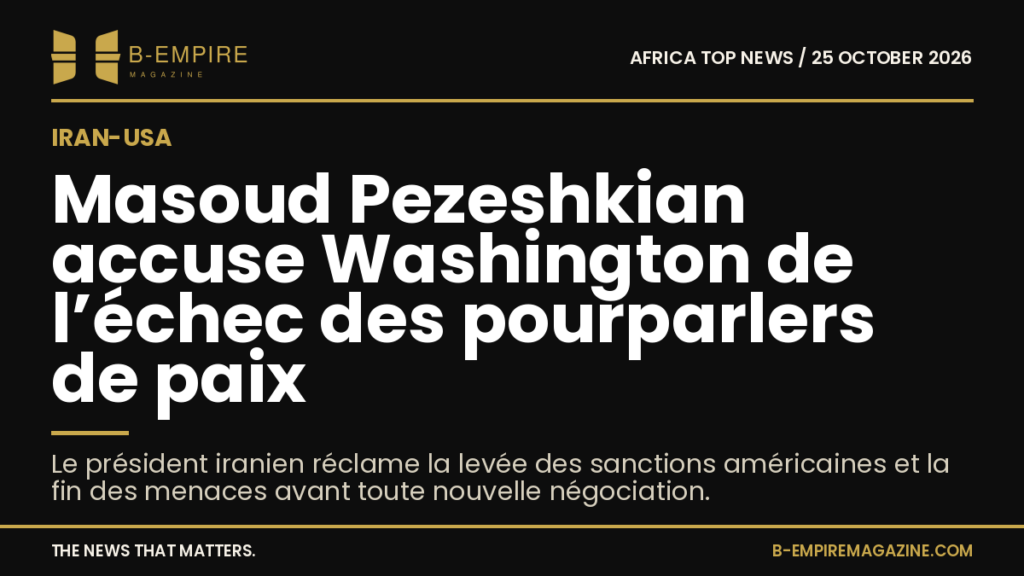
Masoud Pezeshkian Attributes Failure of Iran-US Peace Talks to Washington
Iranian President Masoud Pezeshkian has blamed the United States for the collapse of interim peace talks aimed at ending conflict with Iran and Israel. He insists on renewed negotiations but demands the US lift sanctions and cease threats first. This comes amid warnings from US and Israeli leaders about possible military operations against Iran, raising regional tensions.
Brève Publié le (Africa/Lagos, UTC+1)
Iranian President Masoud Pezeshkian has blamed the United States for the failure of talks on an interim peace deal intended to end the ongoing conflict involving Iran, the US, and Israel.
Speaking on state television on Saturday, Pezeshkian emphasized that despite the collapse of the talks, a new attempt to reach an agreement should still be pursued. However, he reiterated his previous stance that the US must first end its threats against Iran and lift sanctions before any meaningful negotiations can take place.
The comments come amid escalating fears of renewed military action against Iran. On Friday, US President Donald Trump warned of the possibility of launching another major operation against the country. Meanwhile, Israeli Prime Minister Benjamin Netanyahu reaffirmed his commitment to overthrowing the Iranian government.
In response, Iran’s Islamic Revolutionary Guard Corps warned that even limited strikes would provoke a response several times greater. Reports from The New York Times indicate that US and Israeli militaries have developed specific plans for renewed strikes on Iran.
These developments occur as both the US and Israel approach critical elections: Israel is set to elect a new government on Tuesday, and the US Republican Party faces midterm elections on 3 November. The situation remains tense with significant implications for regional security and African interests linked to Middle Eastern stability.