
New twice-yearly HIV prevention drug lenacapavir hard to access in Uganda’s Mbarara city
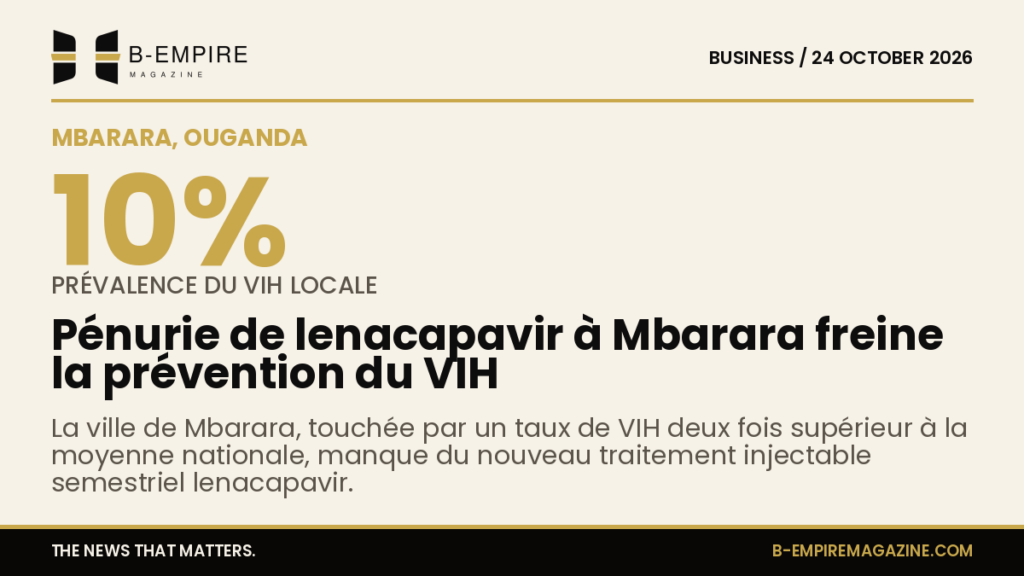
Mbarara, a city in western Uganda with an HIV rate twice the national average, is experiencing shortages of lenacapavir, a twice-yearly HIV prevention injection approved in the United States in 2025. While the drug shows promise in preventing new infections, funding cuts and poor health-seeking behavior hinder access. Health officials highlight risky sexual behavior and low condom use as drivers of infection in the area.
Brève Publié le (Africa/Lagos, UTC+1)
Mbarara, a city in western Uganda, is facing a shortage of lenacapavir, the world’s only twice-yearly HIV prevention injection approved in the United States in 2025. This shortage limits access to a promising new drug that has nearly eliminated new infections in high-risk groups in clinical studies.
Lenacapavir, developed by Gilead Sciences, offers an alternative to daily preventive pills but is currently scarce in Mbarara, where HIV prevalence is around 10%, double the national average. Instead, people are often offered cabotegravir, an injection given every two months.
Immaculate Nyamwija, founder of Action for Improved Health and Wealth in Mbarara, explains that recent funding cuts have halted community outreach programs that brought HIV prevention services closer to people. This, combined with reluctance to seek medical care early, means many do not get tested or treated until very ill.
Health authorities attribute rising infection rates to risky sexual behaviors, including paying for sex in urban hotspots and inconsistent condom use. Nursing officer Tarsisio Biryeija highlights that many people are unaware of the risks associated with unprotected sex, especially during weekend nightlife activities.
Uganda, with roughly 1.5 million people living with HIV, identified Mbarara as a priority area for deploying lenacapavir following its inclusion in global rollout plans last year.