Johannesburg Faces Severe Water Shortages Ahead of Local Elections
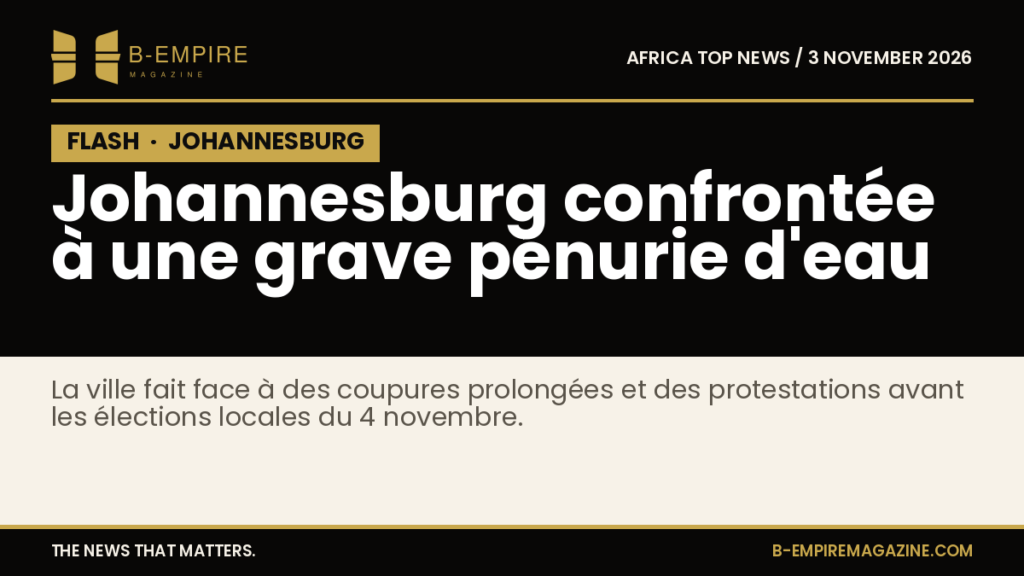
Johannesburg, South Africa's economic hub, is experiencing severe water shortages that have disrupted basic services and sparked public protests ahead of the November 4 local elections. Authorities cite aging infrastructure, leaks, and the El Nino weather pattern as causes, while an inquiry highlights significant water loss and weak municipal management in Gauteng province. The crisis underscores voter frustration with service delivery and may impact support for the ruling African National Congress.
Brève Publié le (Africa/Lagos, UTC+1)
Johannesburg is grappling with severe water shortages that have left taps dry in parts of the city for over ten days, a critical issue ahead of South Africa’s local government elections on November 4.
Mayor Dada Morero acknowledged the disruptions, attributing them to high water consumption and leaks in the city’s aging infrastructure, which requires billions of rands in repairs. Despite these challenges, the city’s water storage has improved to 41 percent as of November 3.
Regional Premier Panyaza Lesufi linked the water losses to the El Nino weather pattern, noting that unexpected drops in water reserves caught authorities off guard despite monitoring systems.
An inquiry by the South African Human Rights Commission revealed that nearly 45 percent of water flowing through Johannesburg’s pipelines is lost due to poor infrastructure. It also pointed to weak financial management and a shortage of qualified personnel in several Gauteng municipalities.
Similar water shortages have been reported in other cities such as Durban and Tshwane, where residents were recently advised against drinking tap water following illness outbreaks.
The water crisis, alongside other service delivery failures and crime, is fueling public frustration and is expected to influence voter behavior in the upcoming elections, potentially affecting the ruling African National Congress’s support ahead of the 2029 national elections.