Ghana’s Agbogbloshie Cleanup Faces a Bigger Test Than Moving Waste
Ghana’s three-month Agbogbloshie evacuation is meant to clear an estimated one million tonnes of waste and prepare the site for redevelopment. Officials also hope to create as many as 20,000 jobs in waste management and the circular economy, but that is an ambition, not a delivered outcome. The transition will depend on worker inclusion, safe recycling capacity and transparent plans for the reclaimed land.
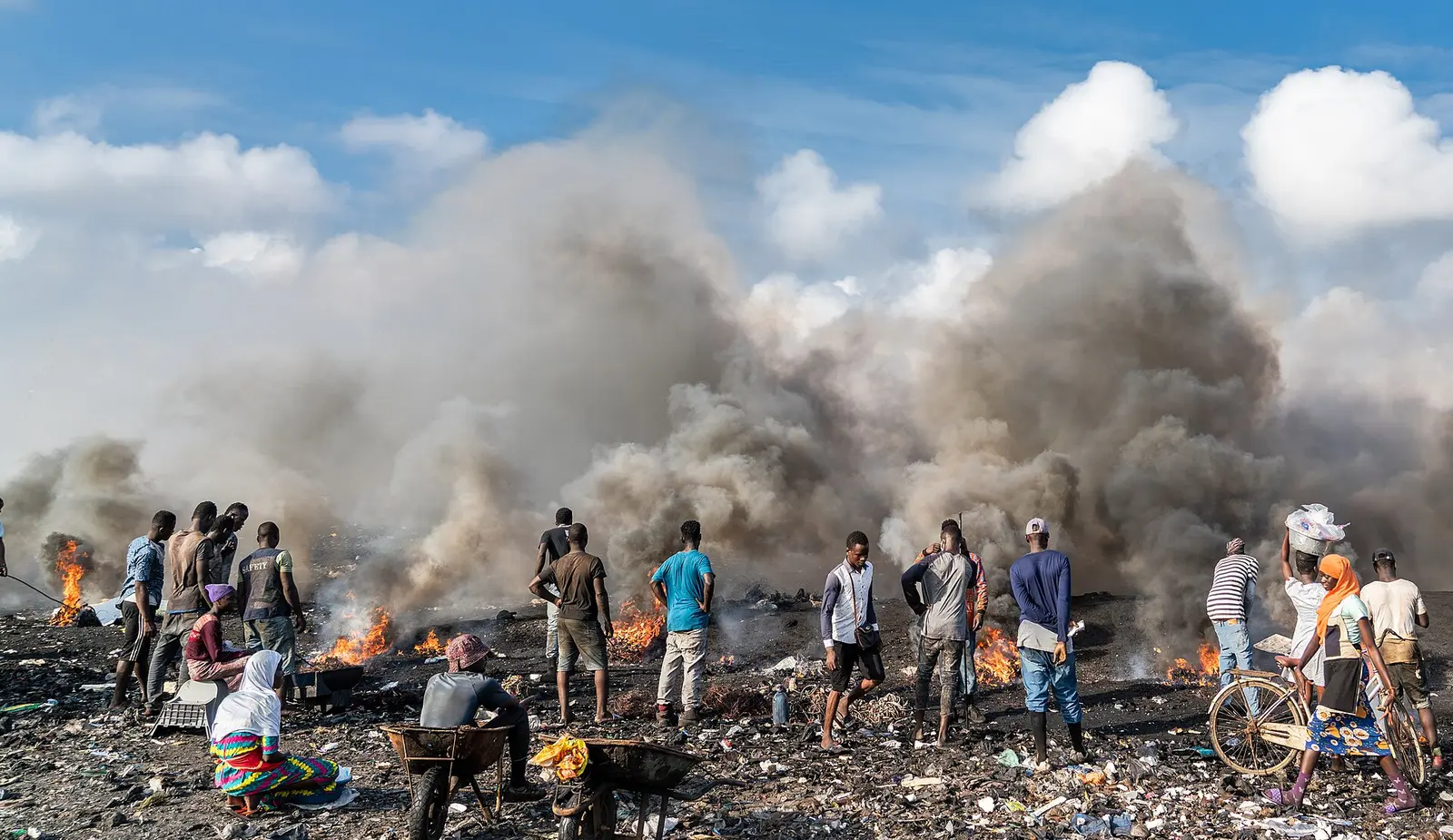
Ghana’s operation to remove the huge waste heaps at Accra’s Agbogbloshie has moved from announcement to excavation, but the most consequential part of the project may begin after the trucks leave. In September, President John Dramani Mahama commissioned a three-month evacuation exercise intended to clear an estimated one million tonnes of accumulated waste and prepare the area for redevelopment. The government has also spoken of bringing informal waste workers into formal recycling and creating up to 20,000 permanent jobs in waste management and the circular economy. That number is a stated ambition, not a count of jobs already created.
The distinction matters. Removing a waste heap can reduce an immediate environmental hazard, but it does not automatically create a safer local economy. Agbogbloshie is not only a site on a map; it is part of a dense urban landscape where scrap dealers, traders, transporters and nearby residents depend on activity around waste. If the cleanup is to be more than relocation and redevelopment, the livelihoods and risks of those people must be part of the operating plan.
Clearance is the visible phase, not the full solution
Ghana News Agency reporting on the launch described the evacuation as a national operation led by the Ministry of Local Government, Chieftaincy and Religious Affairs, with support from the Ghana Armed Forces and the District Road Improvement Project. The waste is being transported to the Adepa Engineered Landfill site near Nsawam. The president said the exercise would support an urban renewal project and an industrial park, including a proposed textile factory. Those are plans for the site’s future; their delivery depends on subsequent investment, approvals and implementation.
The scale is formidable. Officials have put the accumulated waste at about one million tonnes, and have described a 90-day effort using heavy equipment and coordinated public agencies. Even if the removal proceeds on schedule, responsible handling remains essential. Materials differ: mixed household refuse, plastics, metals and discarded electrical equipment need not share the same collection, sorting or treatment pathway. Moving material away from the lagoon does not by itself prove that hazardous components have been separated or recovered safely.
That is why the government’s own wider planning documents are relevant. Ghana’s medium-term environment plan records existing efforts to build e-waste collection and formal recycling capacity, including the E-waste Handover Centre and incentive-backed collection at Old Fadama. It reports that hundreds of tonnes of materials have been collected through these programmes and that some have been directed to qualified recyclers. These are useful foundations, but they are not yet evidence that a million-tonne clearance can be converted into a fully functioning circular-economy system.
Informal workers are part of the infrastructure
Informal recyclers already perform economically valuable work: they identify reusable materials, recover metals and connect discarded goods with buyers. Africanews’ reporting from the site described workers handling electronics and scrap without reliable protective equipment, alongside serious concerns about smoke, cuts and exposure. The report also noted that researchers have not established a precise causal chain between particular illnesses and pollution at the site. The precautionary case for safer conditions is strong even where the exact health burden remains difficult to quantify.
Formalisation can improve safety and traceability, but it should not be shorthand for removing people from the place where they earn a living. A credible transition would establish who is eligible to participate, what training is available, how workers are paid during the changeover and whether existing collectors can access contracts or cooperative structures. It would also need protections for young people and women whose work may be less visible in official plans. Without those details, a promise to include informal workers risks remaining a slogan while the commercial value of recovered materials is captured elsewhere.
The government’s ambition of up to 20,000 permanent jobs should therefore be assessed by quality and durability, not just headline volume. Are the positions direct jobs or estimates that include indirect employment? How many are tied to collection, sorting, repair, reuse, recycling, transport or site management? What wages, safety standards and contract terms will apply? Publishing a transparent baseline and milestones would help communities distinguish an aspirational number from jobs actually funded and filled.
Make circularity measurable
A circular economy works when materials remain in productive use and less waste is created in the first place. For Agbogbloshie, that means more than transporting refuse to an engineered landfill. Authorities and operators would need to report how much material is removed, how much is sorted for reuse or recycling, what is disposed of, and how hazardous fractions are controlled. Independent environmental monitoring around the Korle Lagoon and the receiving landfill could provide a public record of whether risks are being reduced rather than shifted.
There is a commercial opportunity if the system is designed to make recovery reliable. Recyclers need predictable feedstock, suitable facilities and clear standards; manufacturers and buyers need confidence in material quality and traceability. Municipal authorities need collection systems that prevent new heaps from forming. Informal collectors can contribute essential local knowledge, but they need safe equipment and stable terms if they are to become part of a formal supply chain. Each of these elements has to work together for the circular-economy case to be durable.
Ghana’s planning documents show that e-waste collection and training programmes are already part of the policy landscape. The next step is to connect those programmes to the Agbogbloshie transition with named delivery partners, financing, occupational protections and measurable targets. The proposed industrial park and textile factory may create new activity, but new development should not be counted as a substitute for explaining what happens to current workers and waste-related livelihoods.
The accountability test begins now
The immediate public-health and sanitation rationale for clearing the accumulated waste is clear. The longer-term test is whether residents see cleaner surroundings without losing livelihoods or facing the same hazards at another location. That requires consultation, accessible grievance channels and regular updates on both the evacuation and the redevelopment plan. Communities along the haulage route and near the receiving site also deserve information about traffic, dust, safeguards and oversight.
Agbogbloshie’s cleanup could become a practical demonstration of how an African city manages legacy waste while building safer work and recovery industries. But the transformation will not be proven by the sight of excavators or a jobs target alone. It will be proven through verified waste tracking, functioning recycling capacity, safer and better-paid work, and clear evidence that the reclaimed site serves the public interest. Ghana has begun the physical task. Delivering the social and economic transition is the larger undertaking.
Sources
- Africanews, reporting from Agbogbloshie and on the government’s cleanup and jobs ambition (11 November 2026; AFP)
- Ghana News Agency, minister outlines plans for the Agbogbloshie operation (6 September 2026)
- Ghana News Agency report on the evacuation launch, republished with attribution (18 September 2026)
- Ghana Ministry of Environment, Science and Technology, Medium-Term Development Plan 2026–2029