AU Financing Push Puts African Ownership to the Test
The African Union’s financing debate in Accra has put domestic revenue, a unified budget and peace-fund sustainability on the table. Its credibility now depends on member states translating proposals into predictable contributions and measurable results.
The African Union’s financing debate has moved from general calls for self-reliance to a sharper set of institutional choices. At an extraordinary Executive Council session in Accra on 13 November, ministers considered ways to make the Union’s funding more predictable, improve how programmes are budgeted and reduce dependence on external support. The proposals are significant, but the central question is whether governments will convert them into funded, accountable commitments.
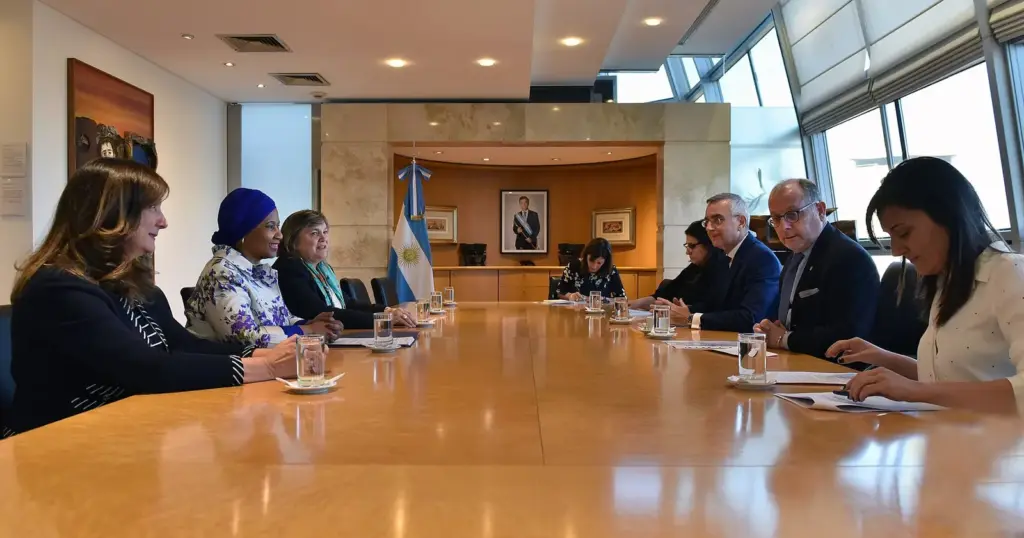
Ghana hosted the meeting, bringing foreign and finance ministers together with the African Union Commission, other AU organs, regional economic communities and African multilateral financial institutions. The African Union’s account of the session described an integrated reform pathway under consideration. Ghana’s Foreign Ministry later said delegates had renewed their commitment to financing the Union. Neither formulation means that every proposal has already become binding policy: the next stage is agreement, implementation and follow-through by member states and AU institutions.
A financing gap with operational consequences
The figures presented in Accra help explain why the debate matters. Ghana’s foreign minister said member states are projected to cover about 99 per cent of the AU’s operational budget in 2027, while their contributions cover only around 4 per cent of the programme budget and approximately 12 per cent of the peace and security budget. The same remarks said only 18 of the Union’s 55 member states had implemented the 0.2 per cent levy on eligible imports.
These numbers describe a mismatch between paying for the institution’s day-to-day operation and financing the work it exists to do. A functioning headquarters is not the same as resources for programmes, mediation, early warning or peace and security activity. When implementation depends heavily on outside funding, priorities can become vulnerable to shifting donor budgets and timetables. But replacing external support with domestic contributions is not simply a matter of announcing a levy. Governments must collect it consistently, account for it transparently and decide how much authority is pooled at continental level.
The levy proposal needs a practical route
The 0.2 per cent levy on eligible imports is presented as a way to generate a more predictable revenue stream. In Accra, the AU Commission chairperson proposed progressively expanding its implementation and reviewing the ceiling on statutory contributions. Ghana urged countries either to accelerate the levy or use an equivalent mechanism that is predictable, transparent and verifiable.
The phrase “eligible imports” matters. The measure is not a simple across-the-board tariff, and its application depends on national systems and agreed rules. Governments need clarity on which goods and transactions qualify, how collections are calculated, how proceeds are transferred and how the system interacts with existing regional trade commitments. Businesses and consumers also need confidence that the charge will be administered consistently rather than becoming an opaque surcharge.
With fewer than half of member states reported as having implemented the levy, the immediate challenge is not inventing another funding slogan. It is diagnosing why uptake is uneven. Some countries may face legal or administrative hurdles; others may have concerns about trade effects, fiscal capacity or the distribution of costs. A credible continental plan should make those barriers visible, provide technical support and set realistic milestones. It should also allow equivalent revenue mechanisms where these can be independently verified and deliver the same predictable contribution.
A single budget can make priorities easier to track
Accra also placed a unified programme-based budget architecture and a medium-term expenditure framework on the agenda. The idea is to connect agreed objectives to budget lines over several years, rather than treating each annual allocation as a separate exercise. Ghana’s proposal called for a clearer division of labour between the AU, regional economic communities and member states, so responsibilities are complementary rather than duplicated.
That could make it easier to see whether money is reaching the work leaders have prioritised. It could also expose overlap, unfunded mandates and programmes that continue without clear evidence of results. Yet a new budget format will not automatically improve performance. It requires comparable reporting, clear ownership for each programme, realistic costing and routine publication of progress. Member states should be able to follow both sides of the bargain: what they have contributed and what the institution has delivered.
There is also a governance question. A stronger AU budget should not weaken scrutiny by concentrating decisions in a way that is hard to review. Clear audit trails, procurement transparency and independent evaluation are part of financial autonomy, not obstacles to it. If governments are being asked to contribute more of their own resources, they will reasonably expect a stronger account of how those resources are used.
Peace Fund proposals require protection against depletion
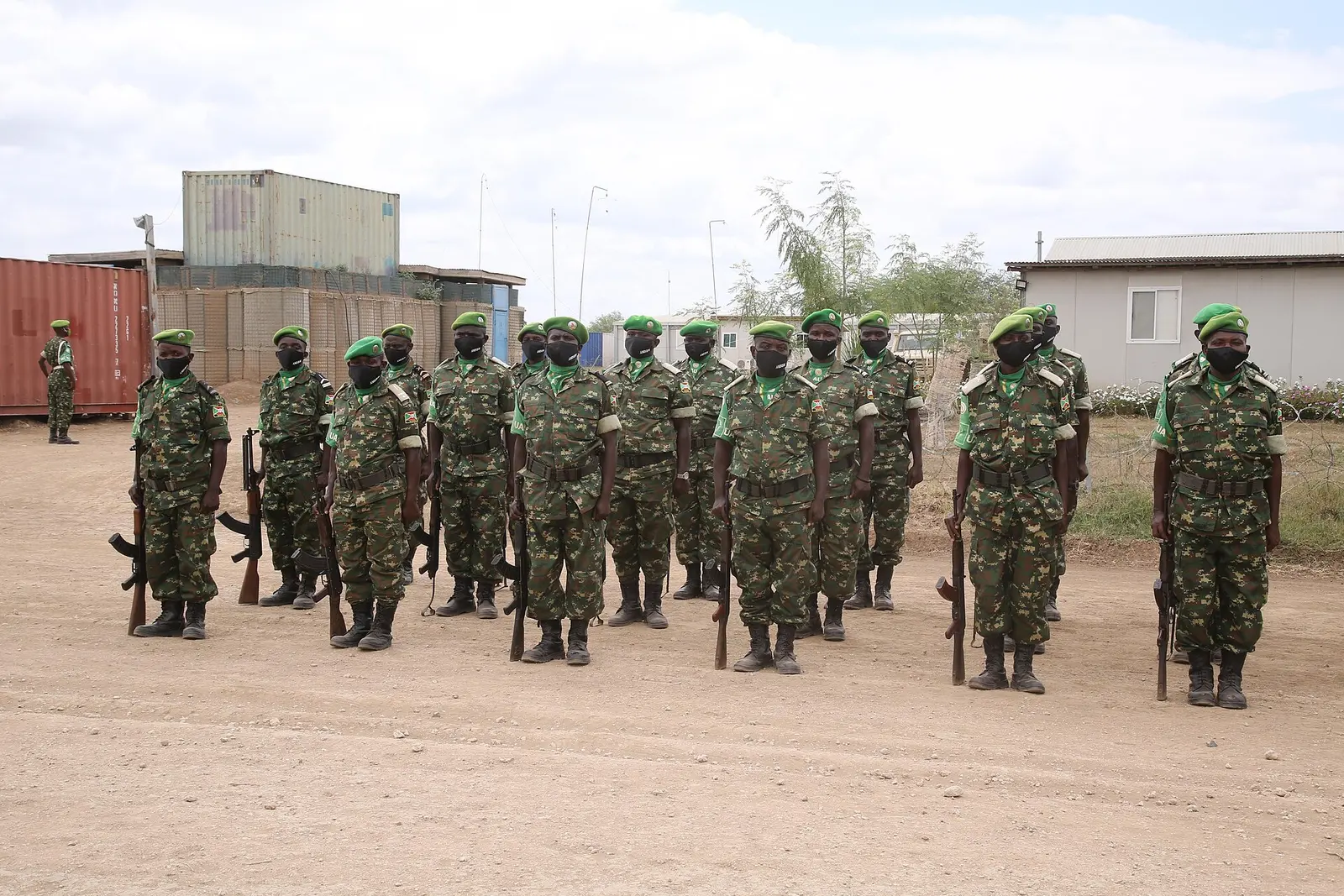
The Peace Fund was another major focus. The AU chairperson called for consideration of controlled annual use of part of its capital to respond to emerging crises, paired with a replenishment mechanism. Ghana backed strengthening the Fund towards a US$1 billion target and diversifying its sources. These remain proposals and calls for consideration, not a report that the full target has been reached or that a new drawdown regime has already been approved.
Any use of capital for urgent responses must be balanced against the Fund’s capacity to act in future crises. That makes replenishment rules, approval thresholds and public reporting essential. A financing framework should define what qualifies as an emergency, who authorises a draw, how quickly money can be released and how it will be restored. Without such safeguards, flexibility can become unpredictable depletion; with them, the Fund may be better positioned to support timely African-led responses.
What African financial institutions can contribute
The session also considered stronger strategic partnerships with African multilateral financial institutions, including presentations from Afreximbank and the African Development Bank. Ghana said it intends to deposit ratification instruments for the African Central Bank, African Monetary Fund and African Investment Bank by 2027, and announced an intention to host an extraordinary summit on African financial institutions in Accra next year.
These announcements point to a wider ambition: mobilising more African capital and expertise for continental priorities. But institutions under development cannot be treated as an immediate substitute for agreed AU contributions. Their mandates, governance, capitalisation and relationship with national and regional bodies all matter. The value of partnership will depend on whether it supports sustainable financing without blurring accountability or creating competing structures.
The credibility test begins after the meeting
The AU Commission was called upon to prepare a roadmap for consideration at the 2027 AU Summit, with responsibilities, timelines, milestones and reporting arrangements. That is the bridge between the political language of sovereignty and the administrative work of reform. A useful roadmap would show which decisions require member-state approval, which can be implemented by the Commission, what each reform costs and how progress will be measured.
For member states, the test is whether commitments appear in national law and budgets, and whether funds are transferred on schedule. For the Commission, it is whether programmes are prioritised, costed and reported against measurable outcomes. For citizens, businesses and civil society, it is whether the results are visible: better coordination, more dependable peace and security capacity, and programmes that advance the AU’s stated development goals.
Accra has made the trade-off harder to avoid. Financial autonomy requires African governments to assume more responsibility, but it also requires the Union to demonstrate disciplined spending and credible results. The proposals on import levies, budget architecture and the Peace Fund offer a framework for that conversation. They do not settle it. The next measure of success will be whether the AU and its members publish a practical route from agreement to collection, allocation and accountability.