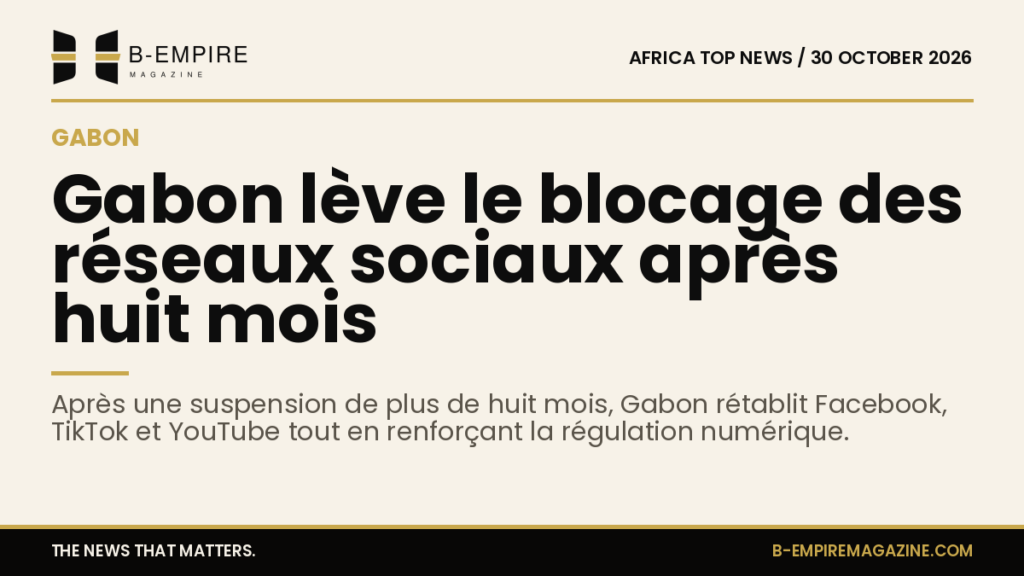
Gabon lifts social media ban after over eight months, sparking debate on crisis control
On October 24, 2026, Gabon announced the restoration of major social media platforms after an eight-month suspension imposed in February for national security and institutional stability. This move comes as authorities also strengthen regulations on digital usage. The episode highlights a wider debate across Africa on whether cutting social media reduces crises or merely changes their visibility.
Brève Publié le (Africa/Lagos, UTC+1) · date de l'événement : 2026-10-24
On October 24, 2026, Gabon restored access to Facebook, TikTok, and YouTube after more than eight months of suspension. The ban, initiated in February by the country’s High Authority for Communication, was justified by concerns over national security and institutional stability amid political tensions.
This decision coincides with Gabon’s government tightening regulations on digital usage, reflecting a complex approach to managing social media’s impact during crises.
Across Africa, similar restrictions have been enacted during periods of political unrest: Senegal limited platform access during 2023 protests; Mozambique imposed restrictions amid 2024 post-election unrest; and Tanzania cut internet access during the October 2025 elections and subsequent demonstrations.
While social media can amplify tensions and facilitate calls for violence, it also serves as a vital space for information, documentation, and public discourse. The Gabon case raises the question of whether suspending digital platforms truly reduces crises or simply obscures them.