Kenya and DR Congo Begin a Cautious Diplomatic Reset
Kenyan President William Ruto and DRC President Félix Tshisekedi have committed to restoring ambassador-level representation and strengthening consultations after a quadripartite summit in Oyo. The joint communiqué also points to cooperation through the East African Community and the International Conference on the Great Lakes Region. It marks a diplomatic opening after years of tension, but it does not announce ambassador appointments or a timetable. The next test is whether the leaders translate the language of rapprochement into working institutions and practical cooperation.
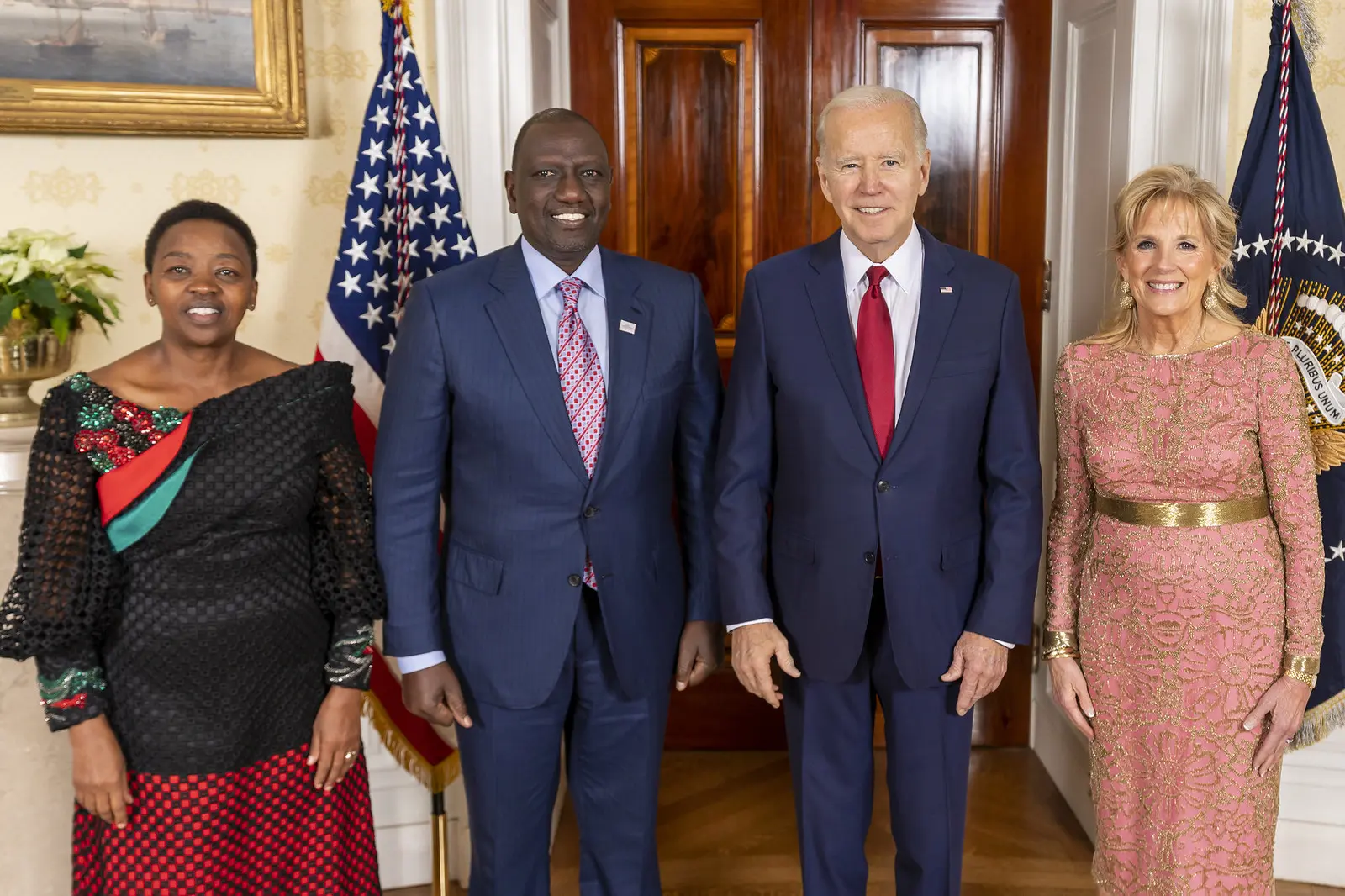
Kenya and the Democratic Republic of Congo have opened a route toward repairing relations that have been strained for nearly three years. At a quadripartite summit in Oyo, Republic of the Congo, on 22 November, Presidents William Ruto and Félix Tshisekedi agreed to prioritise diplomatic channels and work toward the return of ambassadors. Their communiqué also calls for regular consultation, cooperation through regional institutions and stronger economic ties.
The language is significant, but it is not the same as a completed diplomatic restoration. The joint statement records a commitment to the return of ambassadors; it does not announce new appointments or specify when they will take up their posts. That makes the next phase more procedural than ceremonial: each government will need to follow through with accreditation, regular consultations and the bilateral mechanisms named at the summit.
What the Oyo communiqué actually commits to
The meeting brought together Ruto and Tshisekedi with Republic of the Congo President Denis Sassou-N’Guesso and Togo’s Faure Gnassingbé, the African Union-appointed mediator for the security crisis in eastern DRC. The two presidents reaffirmed respect for sovereignty, territorial integrity, non-interference, good neighbourliness and peaceful settlement of disputes. They said diplomatic channels and existing regional mechanisms should be used to examine common concerns and prevent new disputes.
On the institutional side, the leaders highlighted the East African Community (EAC) and the International Conference on the Great Lakes Region (ICGLR). Both Kenya and the DRC are members of the EAC, while the ICGLR is a regional forum whose work covers peace, security and integration in the Great Lakes area. The communiqué calls for stronger cooperation through these mechanisms, giving the diplomatic reset a regional dimension rather than treating it only as a matter between two capitals.
The presidents also called for cooperation between countries in response to Ebola and signalled an interest in strengthening economic cooperation. These are areas where regular official channels can make dialogue more practical: governments can use them to raise concerns, coordinate information and identify specific areas for joint work. The statement, however, does not announce a new trade agreement, security pact or health programme. Those would require further decisions and implementation.
How the relationship deteriorated
The diplomatic rift dates to December 2023, when Kinshasa recalled its ambassador after the launch of the Congo River Alliance, a political-military coalition that includes M23, in Nairobi. The Congolese government objected to the use of Kenya’s capital for the gathering. Kenya maintained that it could not restrict political expression. Relations were further strained after Kenya hosted a meeting of Congolese opposition figures in October 2025, according to reporting by Kenya Broadcasting Corporation.
These episodes exposed a fundamental disagreement about where political activity ends and interference begins. Nairobi’s position emphasised the limits on restricting activity within its territory; Kinshasa viewed events involving Congolese political actors as having direct implications for its sovereignty and security. Restoring normal diplomatic contact does not automatically settle that dispute. It gives the two governments a channel to address future cases before they escalate into public confrontation or retaliatory steps.
The disagreement unfolded alongside conflict in eastern DRC, a crisis with wider regional stakes. Gnassingbé’s presence at Oyo matters because he is the African Union mediator for that security file. His role at the summit links the bilateral thaw to a broader effort to keep regional dialogue functioning. But the Oyo communiqué should not be read as a peace agreement for eastern DRC or as evidence that the conflict has been resolved; its specific focus includes restoring trust between Kenya and the DRC and reaffirming the use of regional mechanisms.
Why ambassadors matter, and what they cannot do alone
Ambassadors provide a permanent senior channel for communication. They can help governments clarify statements, relay concerns, manage consular issues and prepare visits or cooperation agreements. Their return would be a visible signal that both sides are prepared to conduct routine diplomacy again. It would also make it easier to reduce misunderstandings before they become public disputes.
Yet an ambassadorial appointment is only one measure of normalisation. A durable reset would also require regular meetings between foreign ministries, progress on the Joint Grand Commission for Cooperation, and clear points of contact in areas such as trade, health and regional security. The communiqué’s call for permanent consultation points in that direction, but does not give a schedule, agenda or delivery milestones. Those details will show whether the summit has created a continuing process or only a temporary pause in tension.
For businesses and citizens, diplomatic relations are most visible when they affect predictable services and exchange: consular assistance, official travel, trade discussions and the ability of institutions to coordinate. The summit does not specify new visa rules, trade preferences or transport arrangements. Any such changes should be treated as future possibilities, not outcomes already agreed. The immediate result is a political commitment to restore channels and cooperation, with implementation still ahead.
The regional value of a reset
Kenya and the DRC occupy important positions in East and Central African diplomacy. Their relations touch the EAC, Great Lakes security initiatives and discussions about economic integration. When two member states are in a prolonged diplomatic dispute, it can complicate cooperation in forums where they share interests, even if the institutions themselves continue to operate. A return to regular bilateral contact could make it easier to coordinate positions and avoid disagreements spilling across regional agendas.
The involvement of Sassou-N’Guesso and Gnassingbé also demonstrates the use of African-led facilitation. The Oyo meeting was hosted by a neighbouring state and included an AU mediator already engaged on the eastern DRC crisis. Such diplomacy can create space for direct discussion and reinforce regional ownership of problems. Its credibility, however, depends on follow-through: the parties need to act on the commitments and keep channels open when the next difficult issue arises.
Economic cooperation is one potential beneficiary, but it will require specific work. Officials would need to identify practical barriers or opportunities, involve relevant agencies and businesses, and agree on a timeline. Without concrete mechanisms, general references to trade and investment risk remaining aspirational. A revived joint commission could provide a place to turn political intent into proposals, monitor progress and address disputes before they interrupt wider ties.
What to watch next
The first indicators will be whether the two governments announce ambassadorial appointments, resume high-level consultations and set a date for the Joint Grand Commission. The composition and agenda of those meetings will matter as much as their announcement. Observers should also watch whether the EAC and ICGLR are used to advance shared concerns and whether the countries establish regular communication on regional security and public health.
Just as important is the handling of disagreement. The summit’s principles of sovereignty and non-interference provide a shared vocabulary, but they will need to be applied to real disputes involving political activity, security and regional alliances. If the governments can use diplomatic channels to manage those differences without demanding that every underlying interpretation be settled first, the reset may prove resilient. If not, the relationship could again be vulnerable to symbolic incidents and public accusations.
Oyo has produced a diplomatic opening, not a finished settlement. The commitment to restore ambassadors and strengthen regional cooperation gives Nairobi and Kinshasa a framework for rebuilding trust. The practical test now is whether both governments turn that framework into appointments, meetings and sustained collaboration, while keeping the channels open when their interests diverge.
This article is based on the Oyo summit communiqué and reporting available on 24 November 2026. It distinguishes the leaders’ stated commitments from steps that have yet to be implemented.