South Africa Sets Farewell for Phumzile Mlambo-Ngcuka
South Africa has confirmed a State Funeral Category 2 for former deputy president Phumzile Mlambo-Ngcuka on 28 November in Middledrift, Eastern Cape, following a memorial service in Johannesburg on 24 November. The arrangements accompany national tributes to a leader whose career spanned the democratic Parliament, cabinet, the deputy presidency and UN Women. Her legacy is also a reminder that representation matters most when it is tied to institutions, opportunity and lasting public outcomes.
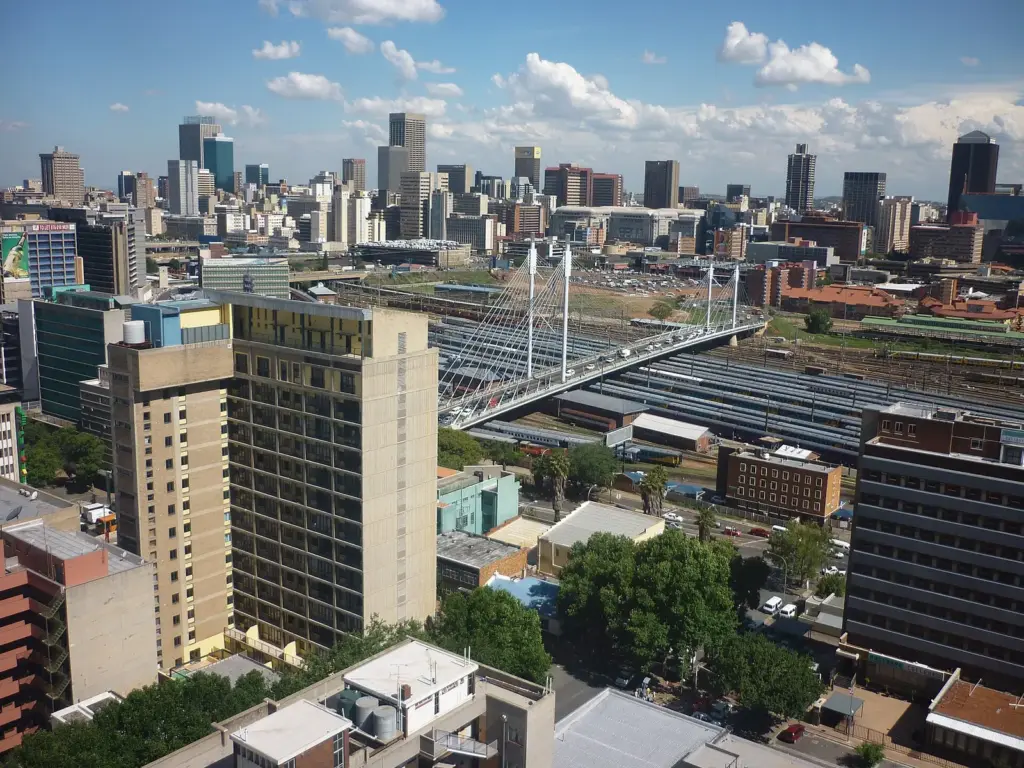
South Africa’s farewell to Phumzile Mlambo-Ngcuka will unfold over the coming week, with a State Funeral Category 2 scheduled for Saturday, 28 November, in Middledrift (eXesi), Eastern Cape. A state memorial service is planned for 2pm on Tuesday, 24 November, at Our Lady of Lourdes Catholic Church in Rivonia, Johannesburg. The government has also directed that the national flag fly at half-mast from Sunday morning through the evening of the funeral. The arrangements, confirmed by President Cyril Ramaphosa, mark the passing of a former deputy president whose public life reached from the country’s democratic transition to global gender-equality work.
+
Mlambo-Ngcuka died on 20 November at age 71, according to official statements and reporting by the Associated Press. South Africa’s Parliament and the United Nations have issued tributes, while officials have asked the public to respect the family’s privacy. The focus of the public record is her work: first as an activist and lawmaker, then in government, and later as head of UN Women. Each role placed her in institutions where questions of representation, economic opportunity and the rights of women and girls were being contested.
+
A milestone in South Africa’s democratic leadership
+
When Mlambo-Ngcuka became deputy president in 2005, she was the first woman to hold that office in South Africa. The achievement carried national symbolism, but her career also shows why representation should be measured beyond the first appointment. She had entered Parliament in the first generation of lawmakers serving after apartheid, contributed to the Constitutional Assembly and chaired Parliament’s Portfolio Committee on Public Service and Administration. These were roles inside the developing architecture of democratic government, where institutions had to become more accountable and representative in practice.
+
Her cabinet responsibilities included deputy minister of trade and industry and minister of minerals and energy. Parliament’s tribute highlights her support for small and medium-sized enterprises and her advocacy for transformation in mining, including greater participation and ownership by women. Those goals remain relevant because formal political rights alone do not ensure that women share in the opportunities created by investment, employment or control of productive assets. In a sector as consequential as mining, participation involves access to skills, capital, decision-making and ownership, not simply visibility at public events.
+
As deputy president, she also served as Leader of Government Business, helping coordinate relations between the executive and Parliament. The function is less visible than a cabinet portfolio, yet it speaks to how government works: legislation, oversight and policy require institutions to communicate and to respect their separate responsibilities. Parliament’s account of her service places emphasis on that relationship and on inclusive economic growth. Those themes make the memorial an occasion not only to recall a historic appointment, but also to consider the everyday institutional work required to make democratic representation consequential.
+
Women’s rights moved from national policy to global advocacy
+
After leaving South Africa’s deputy presidency, Mlambo-Ngcuka became United Nations Under-Secretary-General and Executive Director of UN Women, serving from 2013 to 2021. The transition connected her domestic experience to a global platform, but the central issue remained similar: commitments to equality need institutions, budgets and accountability if they are to change people’s lives. UN Women’s role brought her into partnership with governments, civil society and international agencies working on the rights and opportunities of women and girls.
+
UNAIDS has pointed to another part of that work: her leadership in South Africa’s HIV response. During her time as deputy president she chaired the South African National AIDS Council. In 2007, she led a restructuring intended to bring government, civil society, business and labour together, and she supported a national strategic plan for HIV, AIDS and sexually transmitted infections. The approach recognized that a health response is not delivered by a single ministry alone. Community trust, accessible services and the participation of people affected by a disease can determine whether policy translates into prevention, care and dignity.
+
That public-health work intersected with gender equality. UNAIDS has described her as a voice for placing women’s and girls’ rights, leadership and safety at the centre of the HIV response. This framing matters because health outcomes are shaped by social and economic conditions as well as clinical services. Women’s ability to make decisions, access support and live free from violence can affect both personal wellbeing and the effectiveness of public programmes. Her contribution therefore crossed policy boundaries that are often treated separately.
+
Education was another strand of her public service
+
An educator by profession, Mlambo-Ngcuka founded the Umlambo Foundation to support teachers and improve learning opportunities. SAnews reports that her doctorate, completed in 2013 at the University of Warwick, examined how mobile technologies could support teacher development in resource-poor settings. This is a notably practical area of education policy: teachers are central to learning, yet professional support and resources can be uneven, especially in communities with limited infrastructure.
+
Technology alone cannot solve gaps in school quality. Devices, connectivity and digital content only help when teachers have training, time and the backing of education systems. But focusing on teacher development points toward a durable insight: improvements in learning depend on people and institutions, not simply the tools introduced into classrooms. The foundation’s work offers a way to understand her service beyond elected office, through support for the professionals who shape children’s opportunities over many years.
+
The different strands of her work—constitutional politics, economic transformation, public health, education and women’s rights—share an institutional dimension. They asked how public systems can include people who have historically been excluded and how national commitments can be implemented. That work is rarely complete within one tenure or programme. Its progress is seen in who can enter institutions, whose needs are reflected in plans, and whether resources are actually available to deliver what leaders promise.
+
Public tributes and the work that continues
+
The state memorial and funeral provide formal spaces for South Africans to mourn and recognize a public servant. The dates and locations have been announced by government; further personal information should be treated with care in keeping with the family’s request for privacy. In the days ahead, national tributes will likely revisit the symbolism of her appointment as the country’s first woman deputy president. The more lasting measure, however, lies in the work that institutions and communities continue: expanding women’s participation, strengthening accountable government, supporting teachers and sustaining inclusive health programmes.
+
Her example also invites a broader question about leadership in a democracy: what does it mean for a breakthrough to endure? An individual can open a door, set a standard and use an office to build partnerships. Institutions must then preserve the gains, make them accessible to the next generation and remain answerable for results. That is particularly true of gender equality, where progress can be celebrated in speeches while disparities in safety, opportunity and decision-making persist.
+
As South Africa prepares to honour Mlambo-Ngcuka, the country is remembering both a history-maker and a public servant whose responsibilities spanned local and global arenas. Her legacy is not a single title or achievement. It is a record of working across institutions—Parliament, government, UN Women, the HIV response and education—to connect representation with practical participation. The coming memorials will give the nation an opportunity to reflect on that record and on the unfinished work of making equality visible in daily life.
+
Reporting note: Funeral and memorial details are based on the South African government’s announcement published on 22 November 2026. The Presidency has asked for privacy for the family; this article does not speculate about personal medical details beyond information published by official sources.