Oyo Summit Tests East Africa’s Diplomatic Reset
A four-country summit in Oyo has brought Kenya’s William Ruto and DRC President Félix Tshisekedi into the same diplomatic setting, alongside Republic of Congo host Denis Sassou-Nguesso and Togo’s Faure Gnassingbé. The meeting offers a chance to rebuild trust strained since 2023, while putting Great Lakes security and cross-border economic ties on the same agenda. No final agreement has been confirmed in the reporting reviewed for this article.
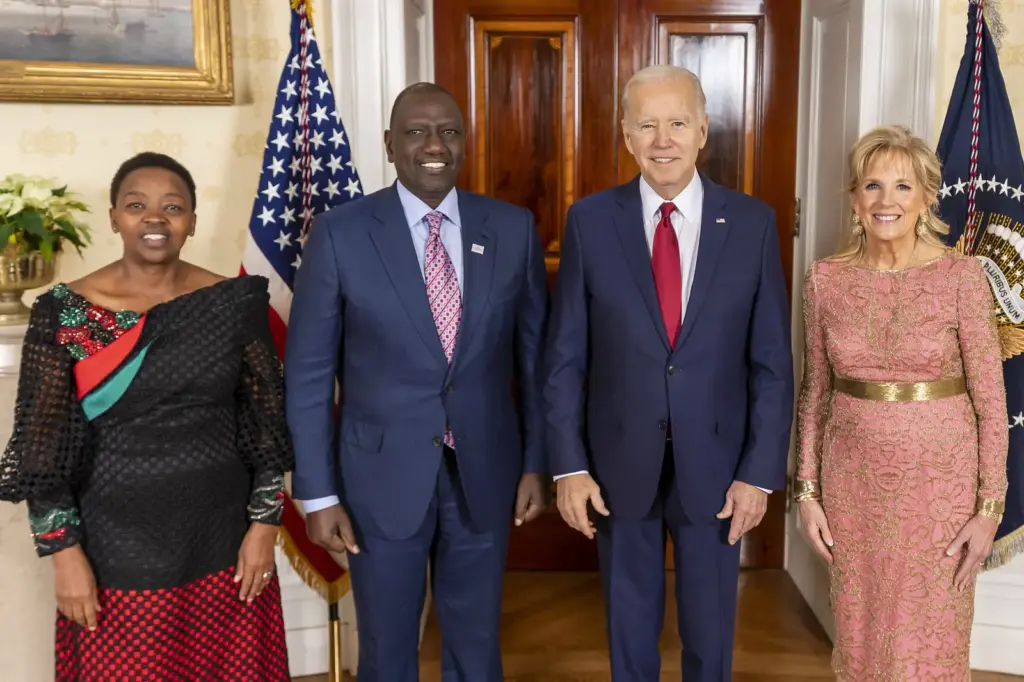
The four-country summit convened in Oyo, Republic of Congo, is testing whether African diplomacy can turn a carefully arranged meeting into practical progress. Kenya’s President William Ruto and Democratic Republic of Congo (DRC) President Félix Tshisekedi have arrived for talks hosted by Denis Sassou-Nguesso, with Togo’s Faure Gnassingbé also attending. The agenda spans regional integration, peace and security, diplomatic ties and economic cooperation, according to reporting by Daily Nation. That breadth reflects the region’s reality: political distrust does not stay confined to protocol when security and trade cross borders.
+
The immediate diplomatic question is whether Nairobi and Kinshasa can restore enough confidence for routine state-to-state work to resume. The deeper test is whether dialogue among the four leaders can support African Union mediation efforts around eastern DRC without confusing a summit meeting with a peace settlement. As of the reporting reviewed for this article, no final communiqué or agreement from the Oyo talks had been confirmed. The significance therefore lies in the opportunity being created, not in an outcome that has yet to be documented.
+
A dispute that has outlasted the original incident
+
Relations deteriorated in December 2023 after the Alliance Fleuve Congo (AFC), a political-military coalition associated with the M23 movement, was launched in Nairobi. Kinshasa objected to political activity on Kenyan soil that it viewed as giving a platform to forces challenging the Congolese government, and recalled its ambassador. Kenya rejected the charge that it had taken part in the coalition’s activities, arguing that its open political and media environment did not amount to interference in a neighbour’s internal affairs.
+
The disagreement has persisted beyond that episode. Daily Nation reports that a 2025 gathering of Congolese opposition figures in Nairobi added to Kinshasa’s concerns. The strain has also shown up in diplomatic representation: the DRC has twice declined to accredit Kenya’s ambassador-designate. These are concrete signs that the relationship is not simply waiting for a warm handshake. Restoring normal channels will require both governments to define what conduct they consider unacceptable and how they will raise future grievances without escalating every dispute into a public confrontation.
+
That distinction matters. Kenya’s stated position has emphasized political freedoms and non-interference; the DRC’s concern is that activities organized outside its borders can have consequences for its security. A useful diplomatic reset would not require either country to abandon its principles. It would require a clearer process for consultation, credible assurances against support for destabilizing activity, and predictable diplomatic contact when accusations arise. Without those mechanisms, a summit photo may offer only temporary reassurance.
+
Security and mediation give Oyo a wider purpose
+
Gnassingbé’s presence gives the summit a direct connection to the regional peace effort. The African Union appointed him as mediator in the eastern DRC crisis, where fighting has carried severe humanitarian consequences and drawn in neighbouring states’ concerns. The AU Peace and Security Council’s October communiqué backed the mediator and a panel of facilitators, called for coordinated follow-up to existing commitments and stressed that there is no viable military solution. It also called for civilian protection, humanitarian access and implementation of peace commitments.
+
Those principles set a demanding context for Oyo. A quadripartite meeting cannot substitute for negotiations involving the parties to the conflict, nor can it resolve every dispute in the Great Lakes region. It can, however, reduce friction between governments whose cooperation is needed for mediation, border security and humanitarian work. Better communication between Nairobi and Kinshasa could help prevent mistrust from undermining wider diplomatic initiatives. The host country and Togo can also use their roles to keep the conversation focused on practical steps rather than competing public narratives.
+
Credibility will depend on follow-through. If leaders agree to regular consultations, appoint officials to maintain a channel, or set a timetable for the next review, those are observable steps. If a statement merely repeats general commitments to peace and unity, it may be harder to tell whether relations have changed. For communities affected by conflict and displacement, the relevant measure is not the ceremonial language but whether diplomacy helps protect civilians, facilitate assistance and sustain pressure for a political process.
+
Trade makes diplomatic stability an economic issue
+
The economic stakes are substantial even without a new trade deal. Daily Nation, citing Observatory of Economic Complexity data, reports that Kenya exported about $236 million in goods to the DRC in 2024, while imports were around $25.8 million. The DRC is also a major market for Kenyan businesses and financial institutions. Goods moving through the Port of Mombasa and the Northern Corridor connect Kenyan logistics networks to eastern Congo, while DRC membership in the East African Community has widened the formal framework for regional commerce.
+
These links make diplomatic friction costly in ways that reach beyond foreign ministries. Uncertainty can complicate investment decisions, the movement of goods and the work of companies operating across borders. It can also weaken confidence in regional integration if governments promote shared markets while political disagreements disrupt cooperation. The trade figures alone do not prove that tensions have caused particular losses; they do show why both sides have an economic interest in reliable relations.
+
For Kenya, stable ties support exporters, transporters and financial institutions seeking to deepen their presence in Central Africa. For the DRC, predictable relations with a regional commercial hub can help connect businesses and consumers to wider markets. The benefit is not automatic: infrastructure, customs processes, security and fair competition still matter. But diplomatic engagement is part of the enabling environment. A reset could make existing regional frameworks more usable; it cannot replace the policy and logistical work needed to make trade inclusive and dependable.
+
What a credible reset would look like
+
The leaders have an opportunity to move from general statements to a limited, verifiable agenda. That could include a standing bilateral channel for security concerns, renewed ambassadorial discussions, regular economic consultations and coordination with the AU mediator. Any commitments should respect sovereignty while addressing legitimate fears that armed movements can exploit political space across borders. They should also be clear enough for officials, businesses and citizens to judge whether implementation is happening.
+
There is a risk of expecting too much from one meeting. The relationship has accumulated grievances over nearly three years, and the conflict in eastern DRC has its own actors, causes and negotiations. Trust is usually rebuilt through repeated interactions, not a single summit. Yet the decision to bring Ruto and Tshisekedi into the same forum is meaningful precisely because the diplomatic channel has been difficult. A direct conversation can test whether the governments are prepared to manage disagreement rather than allow it to define the whole relationship.
+
Oyo’s value will ultimately be measured in what follows: whether contacts continue, whether diplomatic representation becomes easier, whether regional mediation receives consistent support and whether cooperation produces practical gains. The summit has put those possibilities on the table. Until an official outcome is confirmed, the responsible conclusion is narrower: four African governments have created a high-level opening at a moment when diplomacy, regional security and cross-border economic interests intersect. Whether that opening becomes a durable reset remains the work ahead.
+
Reporting note: This article is based on reporting published on 22 November 2026 and an African Union Peace and Security Council communiqué dated 27 October 2026. The summit was described as ongoing in the latest reporting reviewed; no final Oyo communiqué or agreement was confirmed at publication.