
National genome projects in Africa aim to link genetics and healthcare
African countries including Tunisia, Egypt, Senegal, Tanzania, Kenya, and South Africa are developing national genome projects to better understand genetic diversity and its impact on health. These initiatives aim to improve diagnosis, treatment, and disease understanding by integrating genetic data with healthcare, addressing the underrepresentation of African populations in global genomic research.
Brève Publié le (Africa/Lagos, UTC+1)
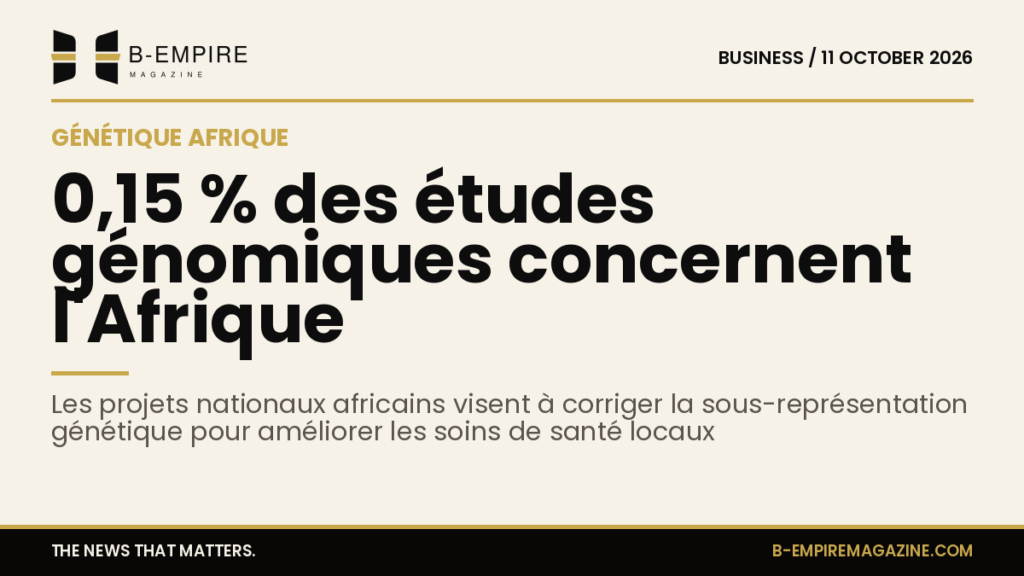
African countries such as Tunisia, Egypt, and Senegal are advancing national genome projects to better connect genetic data with healthcare systems, addressing a critical gap in global genomic research.
Despite Africa’s vast human genetic diversity, only about 0.15% of participants in genome-wide association studies come from African populations. This underrepresentation limits the usefulness of genetic tests and disease understanding for African patients. For example, some genetic variants once thought to cause inherited heart conditions in people of African ancestry were found to be harmless after more African genetic data became available.
National genome projects across Africa vary in scale and focus. Tunisia’s initiative includes studying both healthy individuals and patients with clinical conditions, while Egypt and Senegal have established projects. Tanzania, Kenya, and South Africa are developing government-led efforts. These projects emphasize the need for local expertise, responsible data governance, and sustained investment to effectively improve healthcare.
By building comprehensive genetic databases, these initiatives aim to provide clearer diagnoses for inherited diseases, offer families better information about hereditary conditions, and improve understanding of varied responses to medicines among African populations.