
Senegal to accept IMF program amid hidden debt crisis
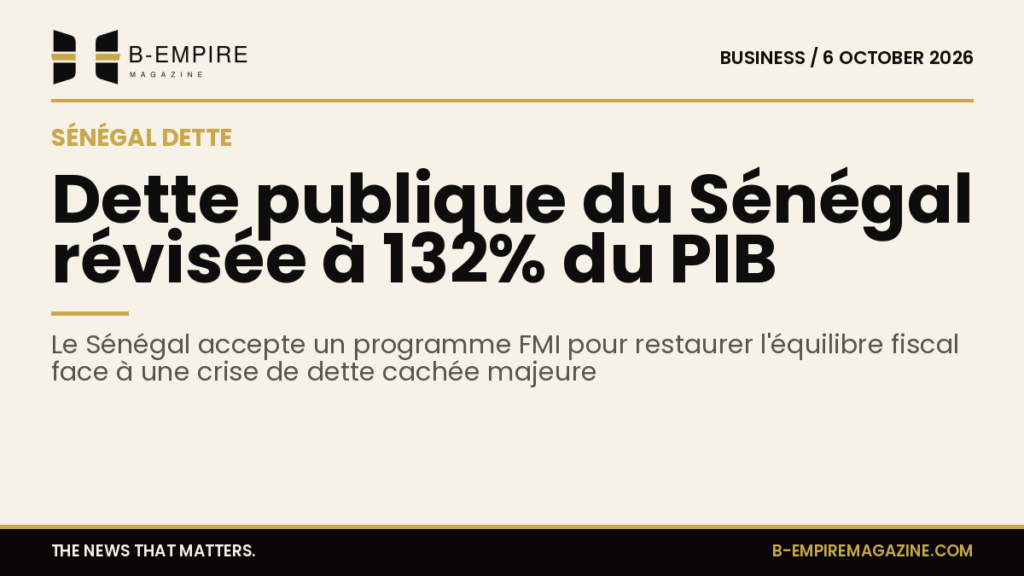
Senegal has uncovered a hidden debt crisis with its public debt revised to 132% of GDP. The country plans to accept a new IMF program aimed at restoring fiscal balance and debt sustainability. The IMF, which failed to detect the full extent of the debt problem earlier, now requires transparency, better debt management, and fiscal consolidation. However, concerns remain about the social and economic impact of austerity measures.
Brève Publié le (Africa/Lagos, UTC+1)
Senegal is preparing to accept a new program with the International Monetary Fund (IMF) to restore fiscal balance and debt sustainability after discovering that its public debt is much higher than officially reported, now revised to 132% of GDP.
The country faces a refinancing need of $11.6 billion in 2026, with debt servicing consuming 25% of tax revenues, and a degraded financial credibility. The IMF program, under the Extended Credit Facility (ECF), will provide about $2.2 billion over 36 months to help address prolonged balance of payments difficulties.
The IMF’s intervention highlights a paradox: the Fund did not anticipate the full scale of Senegal’s debt vulnerabilities despite decades of surveillance. The Fund now calls for increased transparency, improved debt management, rationalization of expenditures, and enhanced revenue mobilization.
However, the fiscal consolidation measures required could have heavy social and economic consequences, reminiscent of the structural adjustment programs of the 1980s. Senegal risks bearing the cost twice—first for past errors and commitments, and second for their correction through restrictive fiscal policies including significant public spending cuts, energy subsidy reforms, and privatization of key economic sectors.