
Mozambique shifts from drug transit to consumer amid trafficking routes
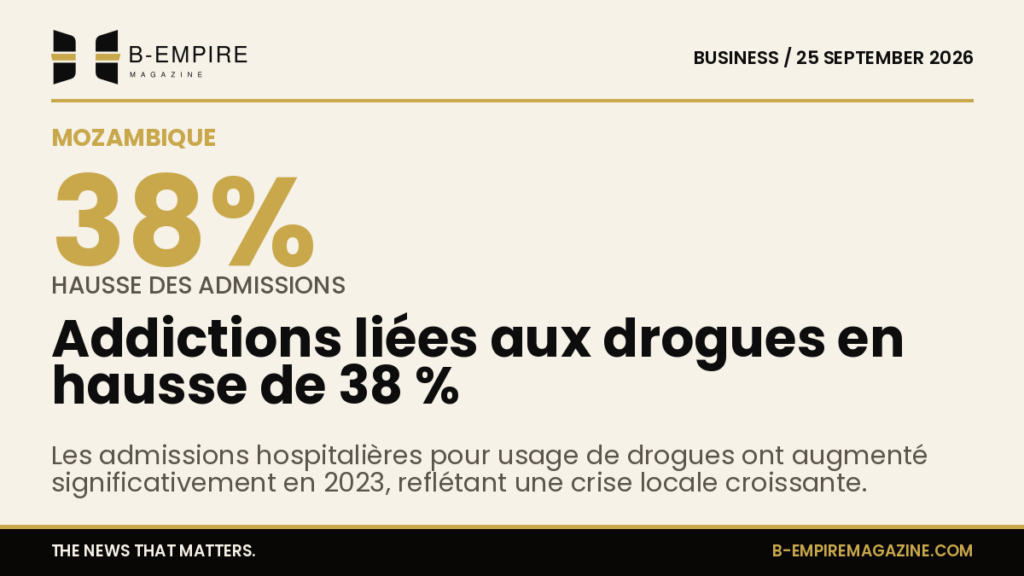
Mozambique, once mainly a drug transit point, is now seeing a surge in local drug addiction, with hospital admissions linked to drug use rising 38% last year. Officials report increased availability of cannabis, crack, heroin, and methamphetamine, fueled by the country's strategic position along trafficking routes. Efforts include regional cooperation and arrests of traffickers, but challenges remain due to limited resources and growing local consumption.
Brève Publié le (Africa/Lagos, UTC+1)
Mozambique is experiencing a significant rise in drug addiction, transitioning from a transit hub to a consumer market, according to officials and recent government data.
Hospital admissions related to drug use increased by 38% last year, reaching over 32,280 cases, though experts believe this underestimates the true scale. Common drugs include cannabis, crack, heroin, and increasingly, methamphetamine.
Elton Raimundo Joaquim, a 27-year-old former music enthusiast, shared his struggle with addiction near Maputo’s largest drug den, illustrating the personal toll of the crisis. Rehabilitation centers like REMAR are seeing more methamphetamine cases, signaling a shift in drug trafficking patterns.
Mozambique’s 2,500-kilometre Indian Ocean coastline and porous borders make it a key transit route between producers and markets. State drug prevention bureau GCPCD noted that while the country was primarily a transit point five years ago, it is now a growing consumer market.
Regional cooperation with countries from Tanzania to South Africa has led to arrests, including the recent extradition of six Mexican nationals involved in methamphetamine manufacturing near Maputo. However, Mozambique lacks sufficient interception tools and specialists to effectively combat the expanding drug problem.