
Morocco’s PAM leads 2026 legislative elections amid low voter turnout
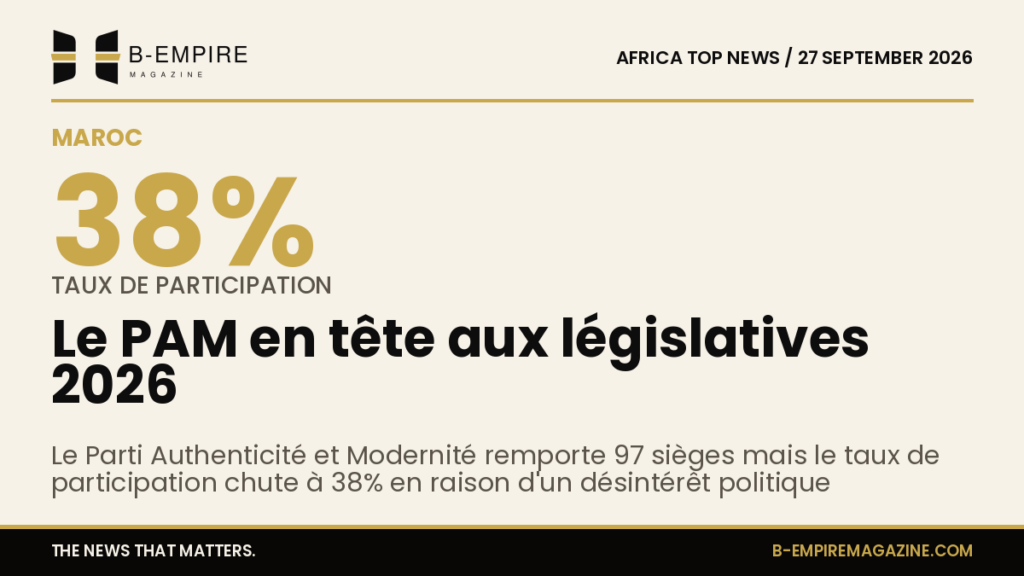
In Morocco's September 23, 2026 legislative elections, the Authenticity and Modernity Party (PAM) emerged as the leading party with 97 seats out of 395. However, voter turnout dropped significantly to around 38%, highlighting a crisis of confidence in political institutions. Analysts attribute PAM's success to strategic recruitment of notable figures and the popularity of technocrat Faouzi Lakjaa. The low participation reflects citizens' perception of limited parliamentary power and central government dominance.
Brève Publié le (Africa/Lagos, UTC+1) · date de l'événement : 2026-09-23
The Moroccan legislative elections held on September 23, 2026, resulted in the Authenticity and Modernity Party (PAM) securing 97 seats in the 395-member Chamber of Representatives, making it the leading party. PAM is part of the outgoing coalition government alongside the National Rally of Independents (RNI) and the Istiqlal party.
Political analyst Mustapha El Mnasfi explains that PAM’s victory is due in part to its preparation and ability to attract notable figures from rival parties, especially the RNI. The party also gained from the inclusion of Faouzi Lakjaa, a popular technocrat known for his leadership of the Royal Moroccan Football Federation and former budget minister. Rumors of Lakjaa potentially becoming prime minister encouraged many established politicians, or “notables,” to join PAM, reflecting a political culture of opportunism.
Despite PAM’s success, voter turnout fell sharply to approximately 38%, a significant decline from previous elections. This low participation is largely attributed to widespread distrust in representative institutions. Many Moroccan citizens perceive that elected deputies have limited authority, with the central government and the Ministry of the Interior retaining primary control over decision-making. As a result, deputies are seen more as aides to central power rather than independent representatives, increasing the distance between citizens and political parties.