Kenya and Sierra Leone Put Creative Economy Plans to the Test
Fresh reporting from CHOGM says Kenya and Sierra Leone have signed statements of intent with Akuna Group to develop creative industries. The next test is whether the proposed links to skills, finance and markets become practical opportunities for local creators.
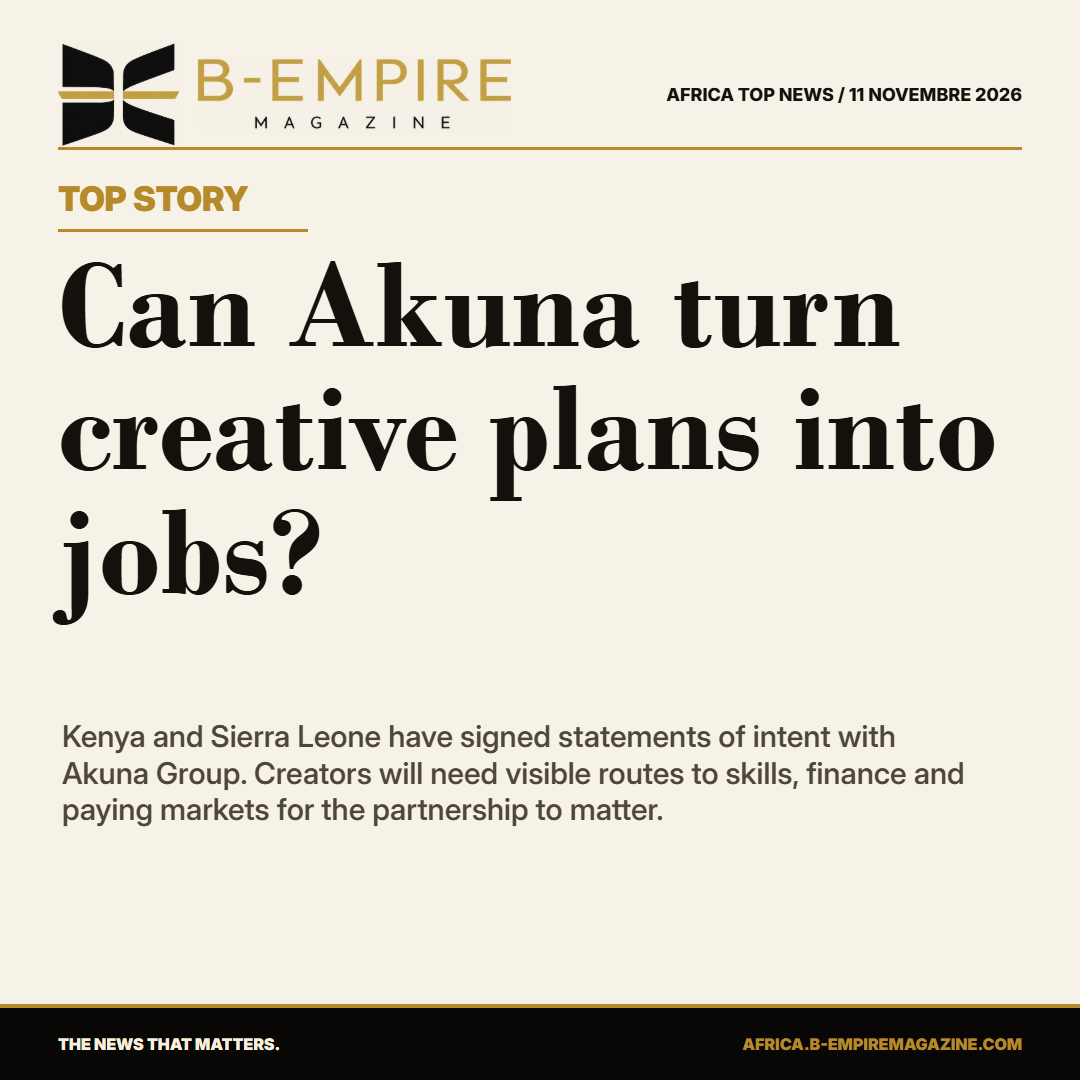
Kenya and Sierra Leone have signed statements of intent with The Akuna Group to develop their creative industries, according to reporting published on November 10. The agreements were signed on the sidelines of the Commonwealth Heads of Government Meeting in Antigua and Barbuda. Kenya’s Foreign Affairs Principal Secretary Korir Sing’Oei and Sierra Leone’s Chief Minister David Moinina Sengeh represented their governments, while Akuna is chaired by actor and entrepreneur Idris Elba. The headline is the new partnership; the more consequential question is whether it can connect local creators to repeatable ways of earning.
The distinction matters. Kenya’s Ministry of Foreign Affairs described its document as a Statement of Intent and a pathway for cooperation on creator financing, youth skills, digital innovation and international market access. The latest reporting says the two countries signed agreements with Akuna, but it does not announce a committed funding pool, a timetable for new projects, or a guaranteed number of jobs. Those outcomes should be treated as ambitions, not results already delivered.
From talent to a functioning market
Creative industries can include film, music, fashion, design and digital content. They are often discussed as a source of employment and exports because a work can reach audiences well beyond the place where it was made. But talent is only one part of a commercial chain. A filmmaker may need equipment, training, production finance, distribution and a clear way to earn from rights. A designer needs reliable inputs, buyers, working capital and logistics. A musician needs live bookings, royalties that can be collected and agreements that protect ownership.
That is why the stated focus on skills, financing and markets is relevant. It identifies practical constraints rather than treating culture as promotion alone. The opportunity for a partnership like this is to help creators move through the steps that separate a promising idea from a business: develop a project, understand its costs, secure suitable capital, produce to a professional standard, reach customers and receive payment. If any link is missing, the value of the whole chain can be limited.
Kenya’s foreign ministry says the initiative is intended to complement Talanta Hela, the government programme focused on identifying and developing talent. It also says the partnership could support monetisation and financing pathways. That language points toward a potential division of roles: public programmes can help identify participants and strengthen skills, while private and international partners may help connect projects to capital, production infrastructure or buyers. Whether the roles are clearly defined will determine whether creators can find and use the support.
Market access must mean more than introductions
For young creative businesses, access to an international market is not simply an invitation to attend an event or meet a buyer. It means having the information, relationships and capacity to make a transaction work. Creators need to know what buyers require, what rights they are licensing, how revenue will be shared, and how delivery and payment will happen. They also need support that continues after a showcase or training session ends.
A useful programme would therefore make its pathways specific. Which creators and business stages are eligible? Will support be grants, loans, investment, commissions or training? Who evaluates projects, and what criteria are used? What happens to intellectual-property rights when a creator accepts support? How will participants in Nairobi, Freetown and other cities access opportunities without relocating or relying on personal connections? The statements of intent may provide a framework for cooperation, but creators and businesses will need these details before they can plan around it.
These questions are not objections to cross-border collaboration. They are what make collaboration commercially credible. Creative businesses often have irregular cash flows and assets that lenders find difficult to value. A financing offer that does not account for production cycles or rights revenue may not fit the sector. Similarly, an international distribution link is only useful if contracts are understandable and creators can track earnings. Practical design can make a partnership more inclusive than a general promise of access.
Two countries, different ecosystems
Kenya and Sierra Leone share an interest in youth enterprise, but their creative sectors are not interchangeable. Each has different public institutions, infrastructure, audiences, financing channels and local strengths. A country-led model, as described in reporting on the Commonwealth Creative Economy Partnership, should allow each government and local industry to set priorities rather than impose one template across participating countries.
For Kenya, the government’s stated intention is linked to its existing talent-development programme and ambitions around digital innovation. For Sierra Leone, the agreement is part of a push to connect human-capital development with youth opportunities and creative enterprise. There may be value in joint learning and regional exchange, but programmes should still be designed around the needs of creators in each market. A film producer in Freetown and a fashion label in Nairobi may face different barriers and require different kinds of support.
Local creative workers should also have a voice in programme design. If the goal is to build sustainable livelihoods, participants need more than access to training: they need to help identify the obstacles that training should address. That could mean a shortage of production spaces, limited access to distribution, uncertain payment systems, or a lack of business advice tailored to creative work. The strongest partnerships will make those bottlenecks visible and respond to them with local partners.
How to judge progress
The early test is transparency. Governments and Akuna can clarify what the statements of intent authorize, which projects are planned first, who will deliver them, and when creators can apply. Publishing eligibility rules, selection processes and the form of any financial support would help distinguish a concrete opportunity from a broad diplomatic commitment.
The next test is whether the programme measures outcomes that matter to creative businesses. Training numbers and event attendance can show reach, but they do not show whether participants found paid work. Better indicators would include projects financed and completed, paid commissions secured, repeat customers, rights revenue collected, businesses still operating after support ends, and jobs created or sustained. Results should also be broken down by country, sector, age and gender so the programme can see who is benefiting and who is being missed.
Finally, creators must be able to retain a fair share of the value they produce. Commercial partnerships can bring expertise and access, but the terms around ownership, revenue and control should be understandable before work begins. The Akuna Group’s public messaging has emphasized helping talent make a living while owning what it creates; turning that principle into clear contracts and usable advice would be a meaningful signal.
Kenya and Sierra Leone have put a useful set of goals on the table: skills, finance, digital innovation and routes to market. Their agreements are a starting point, not proof that the creative economy’s constraints have been solved. The measure of success will be whether a young creator can find a real opportunity, understand its terms, produce work to market and get paid. That is the point at which a statement of intent begins to look like an industry.
Sources
- The Star Kenya: Kenya and Sierra Leone strike creative economy deal for young entrepreneurs, November 10, 2026
- Kenya Ministry of Foreign and Diaspora Affairs: Kenya and Akuna Group partner to unlock opportunities in the creative economy, November 4, 2026
- APO Group / The Akuna Group: Statements of Intent for the Commonwealth Creative Economy Partnership, November 6, 2026