
Algeria enacts death penalty for forest arson amid deadly wildfires
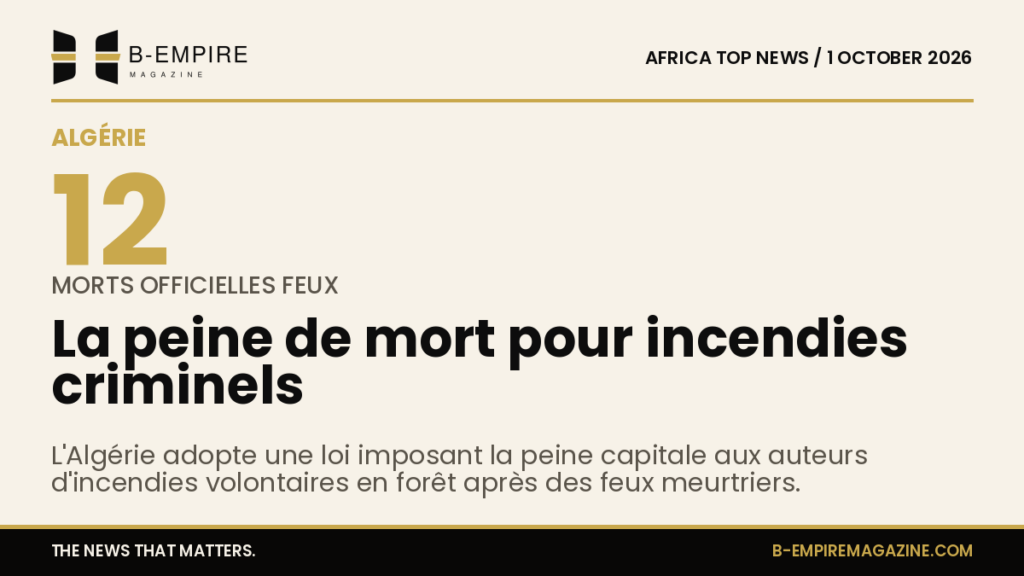
Algerian lawmakers have adopted a new law imposing the death penalty on those convicted of deliberately setting fires in forests and fields, as well as on child kidnappers who torture or sexually assault their victims. This follows deadly wildfires in the northeast that killed at least 12 people. The law reflects the government's stance that arson is now an organised crime, possibly involving foreign actors. Amnesty International has criticized the move, urging focus on prevention and emergency response instead.
Brève Publié le (Africa/Lagos, UTC+1)
Algeria’s parliament adopted a law on Thursday imposing the death penalty on individuals convicted of deliberately setting fires in forests, woods, or fields, following deadly wildfires that swept the country’s northeast during the summer.
The official death toll from the blazes stands at 12, though witnesses report higher casualties. Algeria had maintained a moratorium on the death penalty since 1993, but President Abdelmadjid Tebboune ordered amendments to broaden capital punishment to include forest arson and child kidnappings involving torture or sexual assault.
Justice Minister Lotfi Boudjemaa justified the new penalties by describing arson as reaching “the level of organised crime,” with investigations revealing links to foreign parties. He characterized such acts as treason and attacks on national integrity.
The law also extends the death penalty to child kidnappings involving torture, sexual assault, or mutilation. Despite the moratorium, some death sentences have been issued in terror-related cases, though no executions have yet been carried out. Tebboune has stated executions will proceed once appeals are exhausted.
Amnesty International condemned the law as a “deeply retrograde response,” urging Algeria to focus on protecting lives and improving prevention and emergency response to wildfires instead of resuming executions.
The legislation will next be reviewed by the Senate before official ratification by the president. Forest fires are a recurrent issue in northern Algeria, exacerbated by climate change effects such as drought and heatwaves.