
Morocco’s EV Battery Gigafactory Puts Africa Inside the Clean-Tech Supply Chain
The AfDB-backed Gotion battery project in Morocco is not just another factory announcement. It is a test of whether Africa can capture more value from electric mobility, energy storage and critical minerals.
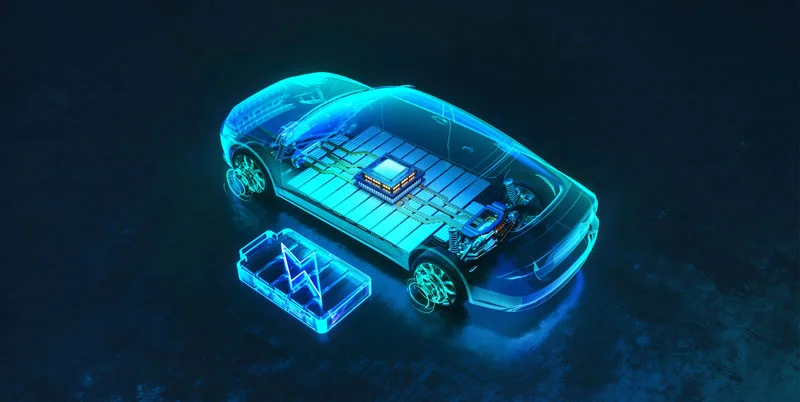
Morocco has moved another step toward becoming Africa’s most important electric-mobility manufacturing hub. On 24 July 2026, the African Development Bank Group approved a EUR100 million loan for Gotion Power Morocco to develop what the Bank describes as Africa’s first integrated lithium iron phosphate battery gigafactory. The plant is planned for the Rabat-Sale-Kenitra Free Trade Zone and will be led by Gotion High-Tech Co. Ltd., the Chinese battery manufacturer listed in Shenzhen.
The numbers matter because they move the story beyond a symbolic headline. According to the African Development Bank, the first phase is designed to produce 10 gigawatt-hours of battery cells and packs for electric vehicles, with a later expansion path toward 100 gigawatt-hours. The Bank also plans to mobilise up to EUR141 million from additional partners under the New African Financial Architecture for Development. Reuters, citing the project’s developers, reported that the initial investment requirement is about $1.3 billion and that the plant is expected to produce cathodes and anodes as well as batteries, with a large part of output aimed at Europe.
Why this project matters for Africa
The central issue is not only that Morocco may get a large factory. The deeper issue is whether Africa can move from being discussed mainly as a source of raw materials to being treated as a manufacturing location inside the global clean-tech economy. Battery supply chains are no longer a niche industrial topic. They sit at the centre of electric vehicles, renewable power grids, storage systems, logistics, mining strategy and trade policy. If Africa remains outside the higher-value parts of that chain, the continent risks watching the green transition repeat an old pattern: resources leave, finished technology returns, and the strongest margins are captured elsewhere.
Morocco is trying to break that pattern by using its geography, automotive base and trade links. The country already has a strong car manufacturing ecosystem and direct access to European markets. That gives the Gotion project a strategic logic: production in Morocco can serve global EV demand while giving African industrial policy a concrete example of value addition. It also helps explain why the AfDB is framing the investment as more than project finance. The Bank links the gigafactory to industrialisation, resilient infrastructure, local value chains and regional integration.
The clean-energy angle
There is also a power-system story behind the factory. Battery storage is one of the missing pieces in Africa’s energy transition. Solar and wind can expand quickly, but grids need storage, flexibility and industrial capacity if renewable power is to become reliable at scale. The AfDB said the facility is expected to be powered primarily by renewable energy and to support the wider deployment of low-carbon energy systems. That is important for Morocco, but it also matters for the continent’s broader energy debate. Africa needs more generation, more grids, more storage and more local jobs at the same time.
The project is expected to create more than 600 direct jobs in its first phase and reach a local industrial integration rate of 70 percent, according to the Bank. Those details should be watched closely. A gigafactory can look impressive in a press release, but the real development impact depends on skills, supplier depth, local procurement, training, logistics and the ability of nearby firms to join the value chain. If the factory becomes a largely imported enclave, its value for Africa will be limited. If it anchors a wider Moroccan and African battery ecosystem, it becomes a much bigger story.
Morocco’s advantage, and Africa’s test
Morocco’s advantage is clear. It has proximity to Europe, ports, free zones, renewable-energy ambitions and an existing automotive cluster. Chinese battery companies are looking for locations that can serve international markets while navigating new trade rules and demand from carmakers. Morocco fits that map better than many African economies. But that advantage also creates a question for the rest of the continent: can this type of project remain a Moroccan exception, or can it become a model for African industrial corridors connected to minerals, power, ports and skilled labour?
For countries rich in lithium, manganese, graphite, cobalt, nickel or copper, the lesson is direct. The clean-tech race will reward countries that can combine resources with processing, energy, logistics, finance and stable regulation. Raw deposits alone are not enough. The Gotion project shows what international investors and development banks are looking for: bankable infrastructure, export access, industrial policy and credible execution. That combination is hard to build, but it is exactly where Africa’s clean-tech opportunity sits.
What investors and policymakers should watch next
The next signals are practical. The first is financing: whether the additional EUR141 million that AfDB plans to mobilise arrives on time and on terms that support the full project. The second is construction and procurement: whether local suppliers can participate in meaningful parts of the chain. The third is energy: whether renewable power really becomes central to the plant’s operations. The fourth is market access: whether exports to Europe and other markets proceed smoothly as battery trade becomes more political.
There is also a regional integration question. A factory in Morocco can strengthen Africa’s position in the clean-energy economy, but the continent will benefit more if connected countries, suppliers and skills programmes are pulled into the ecosystem. That is where institutions such as the AfDB, African governments and private manufacturers can turn one factory into a wider industrial strategy. The goal should not be only to announce Africa’s first battery gigafactory. The goal should be to make sure it is not the last.
The bigger reading
For B-EMPIRE Magazine Africa, the real headline is that Morocco is positioning itself at the intersection of electric vehicles, energy storage, Chinese industrial capital, European demand and African development finance. That is a powerful place to stand in 2026. It gives Rabat leverage, but it also raises expectations. A project of this scale will be judged not only by output in gigawatt-hours, but by whether it builds skills, suppliers, jobs and technological confidence on African soil.
If the project delivers, Morocco will have done more than host a major factory. It will have shown that Africa can compete for a serious place in the industrial architecture of the green transition. If it falls short, it will still be a reminder that the continent’s clean-tech future cannot be built on announcements alone. It must be built on execution, energy, finance, logistics and the hard work of turning value-chain language into real production.