Nigeria Pitches a West African Bond Passport to Unlock Regional Capital
Nigeria’s finance minister has proposed an issuer passport, shared investor identification and linked settlement infrastructure for ten West African markets. The plan could widen access to capital, but it must connect with regional integration work already under way.
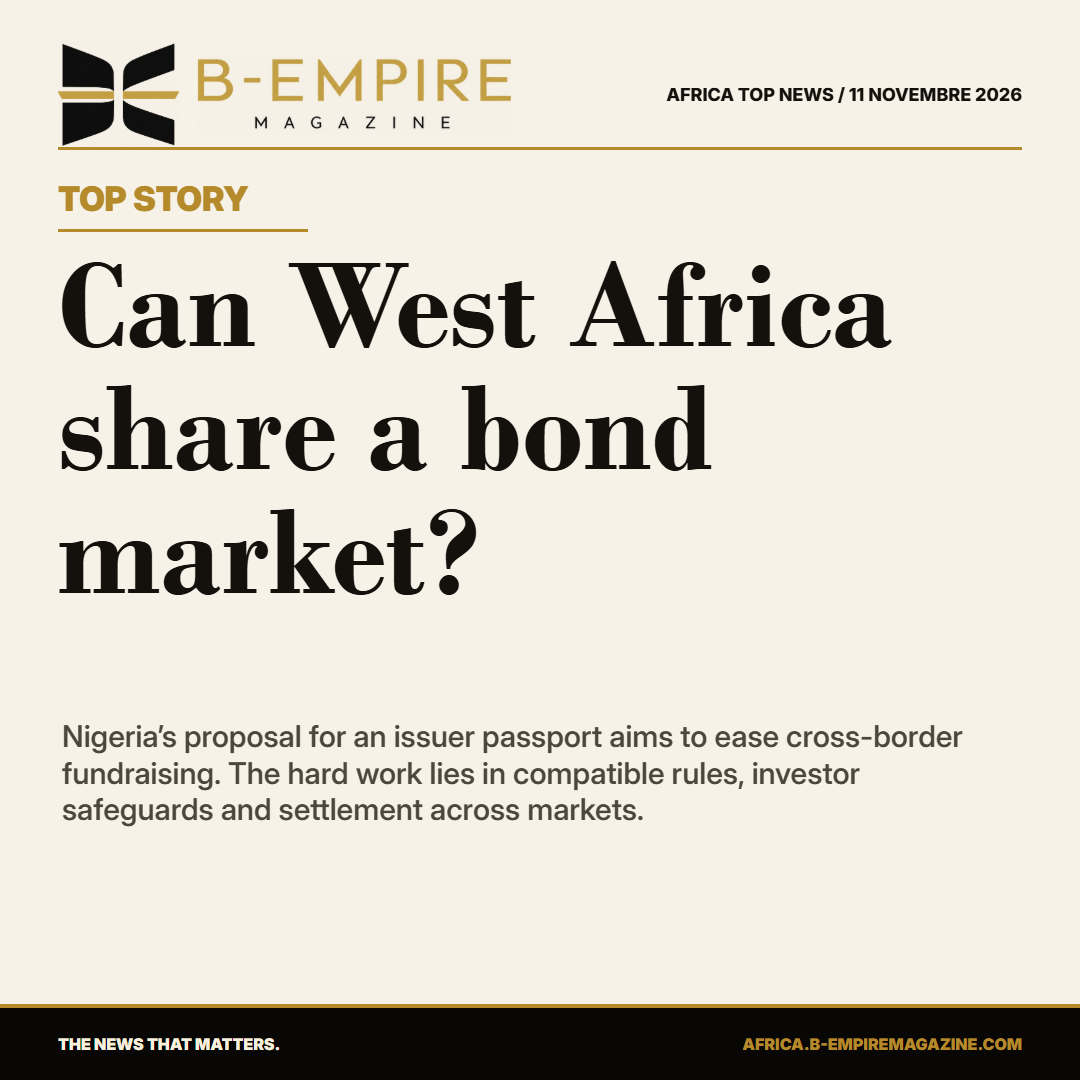
Nigeria is proposing a set of reforms to make it easier for governments and companies to raise money across West Africa. Finance Minister Taiwo Oyedele outlined the ideas at the S&P Global Ratings Africa Summit in Lagos on November 10, according to Reuters. They include an issuer passport, a shared investor-identification system and links between regional trading, settlement and payment infrastructure. The proposal would cover Nigeria, Ghana and eight members of the West African Economic and Monetary Union (WAEMU).
The ambition is consequential, but the proposal is not yet a functioning regional market. No implementation timetable, agreed rulebook or binding commitment from all ten countries was reported. And the idea of a “passport” is not entirely new to the region’s capital-market agenda. The West African Capital Markets Integration Council (WACMIC) has been working toward integration for years, including a common passport for qualified brokers. The fresh question is whether the proposed issuer and investor arrangements can build on that foundation and deliver capital raising across borders in practice.
What Nigeria is proposing
Reuters reported three main strands. First, a regional passport could allow an issuer approved in one participating market to seek investors in the others without repeating a full regulatory approval process country by country. Second, a unified investor identification system could reduce the need for investors already registered in one market to complete onboarding again in another. Third, Nigeria wants trading, settlement and payment infrastructure to connect, with transactions settled directly in local currencies.
The minister also raised the possibility of a regional local-currency bond index and a credit-enhancement facility for cross-border infrastructure financing. These measures address different frictions. A common or mutually recognised offering route concerns issuer disclosure and regulatory review; investor identification concerns access and compliance; settlement concerns the delivery of money and securities. A credit facility would instead address risk and the terms on which an infrastructure project can borrow. Combining them under one headline should not obscure that each needs its own design and approvals.
The proposed geography is also specific. Alongside Nigeria and Ghana, the plan described by Reuters includes Benin, Burkina Faso, Côte d’Ivoire, Guinea-Bissau, Mali, Niger, Senegal and Togo. The eight WAEMU members share a regional central bank and currency, while Nigeria and Ghana operate their own currencies and regulatory institutions. That mix makes coordination possible but not automatic: market rules, investor protections, foreign-exchange arrangements and the treatment of proceeds would need to work across different national systems.
A foundation exists, but it is not a finished market
WACMIC’s published framework shows that regional integration has been a long-standing objective. The council, which brings together securities commissions and exchanges across the ECOWAS region, sets out phases ranging from sponsored access for brokers to a common passport for qualified brokers and, ultimately, a linked regional trading platform. BRVM says the first phase began in 2015, with transactions conducted through local brokers in other jurisdictions.
That broker passport is distinct from the issuer passport now being proposed. A qualified broker’s ability to access another market does not by itself mean a company can issue a bond under one regional disclosure process, nor that an investor can subscribe and settle through a seamless system. It does, however, offer an institutional place to start: participating regulators and exchanges have already been considering how recognition, access and trading links might be structured.
The region also has a separate example of cross-border infrastructure in payments. PAPSS, developed by Afreximbank with the African Union and AfCFTA Secretariat, describes a system for processing cross-border payments in local currencies. Such payment rails can help move funds between countries, but payments infrastructure is not a substitute for securities-market rules, custody, clearing or investor remedies. The distinction matters if policymakers want a bond transaction to move from a prospectus in one country to an investor, an exchange and a final settlement in another.
Why a passport could matter to issuers
Smaller capital markets can limit the pool of investors available to a large or long-term borrower. If a regional approval route were credible, an infrastructure issuer might reach investors beyond its home market without duplicating every procedural step. A wider investor base could improve the chance of matching long-lived projects with patient capital, while a regional index could make local-currency debt easier to track and compare.
But “fewer approvals” cannot mean weaker scrutiny. Investors need comparable, reliable information on the issuer, the project, repayment sources, currency exposure and risks. Regulators would need to agree what can be recognised across borders, what remains subject to domestic review, and how disputes or defaults are handled. Issuers also need predictability: if each market applies different additional requirements after a supposed passport is granted, the promised cost and time savings may disappear.
Investor identification presents a similar balance. A reusable identity could reduce repetition, but financial institutions still need to meet applicable customer due-diligence, sanctions and anti-money-laundering rules. The workable objective is not to remove checks; it is to establish secure and trusted ways for compliant checks to be recognised across participating markets. That calls for standards, data protection and clear responsibility when an investor’s records are used by another institution.
Settlement is where coordination becomes tangible
Linking trading venues is only one piece of market integration. A buyer must receive the security and the seller must receive the funds with confidence that both legs of the transaction will complete. That requires compatible clearing and settlement procedures, custody arrangements, operating hours, dispute processes and rules for failed trades. Local-currency settlement adds another layer: participants must know how exchange rates are set, where liquidity is available and how risk is allocated when a payment crosses currencies.
A phased pilot could make the proposal more testable than an immediate region-wide launch. Regulators might select a small group of willing markets, define one type of issuer and security, and publish common disclosure and settlement requirements. A pilot would also show whether investors actually use the route, whether issuers save time or cost, and where operational gaps remain. Any credit-enhancement facility would need transparent eligibility and risk-sharing terms so that public or development finance does not obscure the underlying project’s repayment capacity.
From proposal to measurable progress
The next signal to watch is not another statement of support but a joint work plan: named regulators, agreed legal changes, a timetable, pilot markets and rules for investor protection. Progress should be measured in completed cross-border issuance, settlement reliability, participation by investors from more than one market and the cost and time required for an issuer to raise capital. Those metrics would make it possible to tell integration from announcement.
Nigeria’s proposal addresses a real regional challenge: fragmented markets can make it harder to assemble the long-term capital needed for infrastructure and business growth. But West Africa already has integration structures, and the additional value will depend on how well the new issuer and investor ideas connect to them. A bond passport will be useful only if regulators trust one another’s standards, investors can understand the risks and money and securities can settle predictably. The ambition is regional; the credibility will be built transaction by transaction.