
Repair, reuse, and recycling form the backbone of Africa’s circular economy
Many African cities demonstrate circular economy principles by repairing, reusing, and recycling waste products like fridges, clothes, and crop residues. These practices are driven by economic necessity and unreliable waste collection. Countries such as Rwanda, Ethiopia, Ghana, Nigeria, South Africa, Morocco, and Kenya have implemented policies and facilities to support recycling and waste-to-energy projects, while others still rely on linear waste systems.
Brève Publié le (Africa/Lagos, UTC+1)
In many African cities, circular economy practices are embedded in daily life through activities such as repairing broken fridges, altering old clothes, and converting crop residues into animal feed or biogas. These actions extend product life and reduce waste, often motivated by limited incomes and unreliable waste collection.
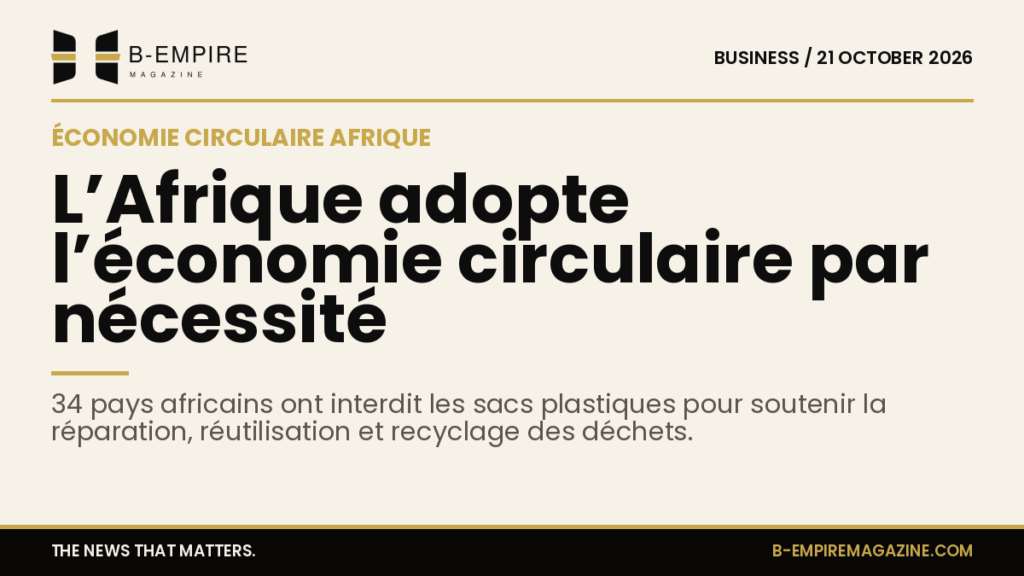
Research highlights that 34 African countries have banned plastic bags to some extent. Rwanda, Ethiopia, Ghana, Nigeria, South Africa, and Morocco have established e-waste recycling facilities and waste-to-energy projects. Kenya enforces manufacturer responsibility for product recycling post-consumer use.
Despite some countries like Somalia, Sudan, and Congo still relying on traditional linear waste systems, the continent’s circular economy is largely driven by informal sector actors such as repairers, waste pickers, farmers, and small businesses. These groups actively engage in reusing, reselling, sharing, and converting waste into productive resources, demonstrating that circular economy practices are already widespread and rooted in African economic activity.