
South Africa aims to improve VAT compliance with digital invoice system
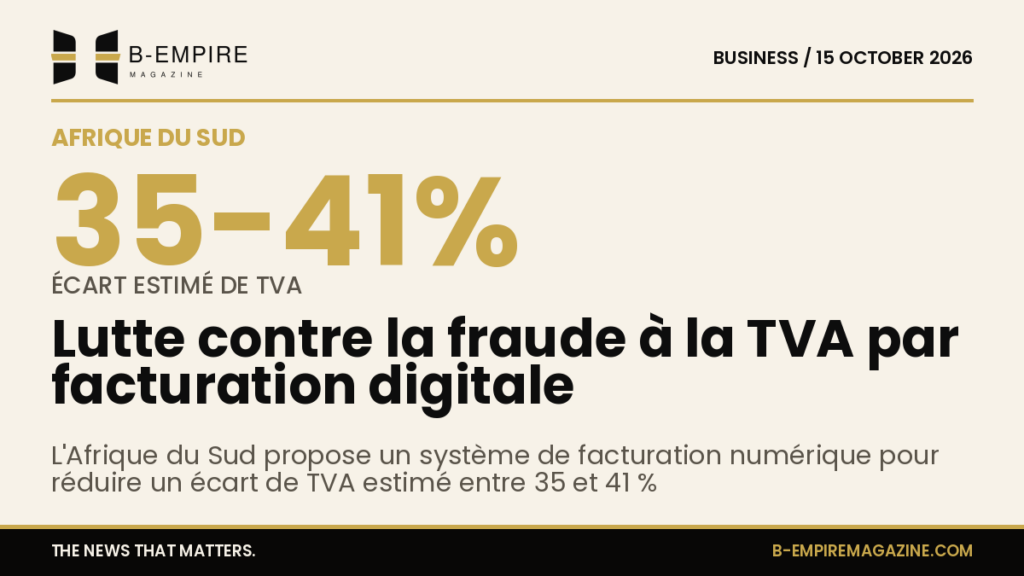
South Africa's Revenue Service proposed in August 2026 a near real-time digital VAT reporting system where businesses issue invoices in a standard digital format automatically sent to tax authorities. This aims to reduce the country's estimated VAT reporting gap of 35-41% and improve tax revenue collection, drawing on experiences from Uganda, Rwanda, and Ethiopia.
Brève Publié le (Africa/Lagos, UTC+1)
South Africa’s Revenue Service proposed in August 2026 a near real-time digital VAT reporting system to improve tax compliance and reduce the VAT gap.
Currently, VAT-registered businesses file returns electronically, but supporting invoices are checked only after submission upon request. The new system would have businesses issue invoices in a standard digital format, with transaction details sent automatically to the tax authority, enabling pre-filled returns for review and faster discrepancy detection.
This reform aims to address South Africa’s significant domestic VAT reporting gap, estimated between 35% and 41% during 2016-2020, which represents under-reported VAT. VAT is the country’s second-largest tax revenue source, raising about US$28 billion in 2024/25.
Research from South Africa and other African countries like Uganda, Rwanda, and Ethiopia shows that digital invoice records can improve VAT reporting accuracy. However, businesses may still attempt to under-report by exaggerating purchases or concealing sales, so tax authorities must compare buyer and seller records and investigate mismatches.
Public comments on the proposal were due by 16 October 2026, signaling ongoing consultation on the reform’s implementation.