
African finance ministers push back as IMF warns on debt and austerity
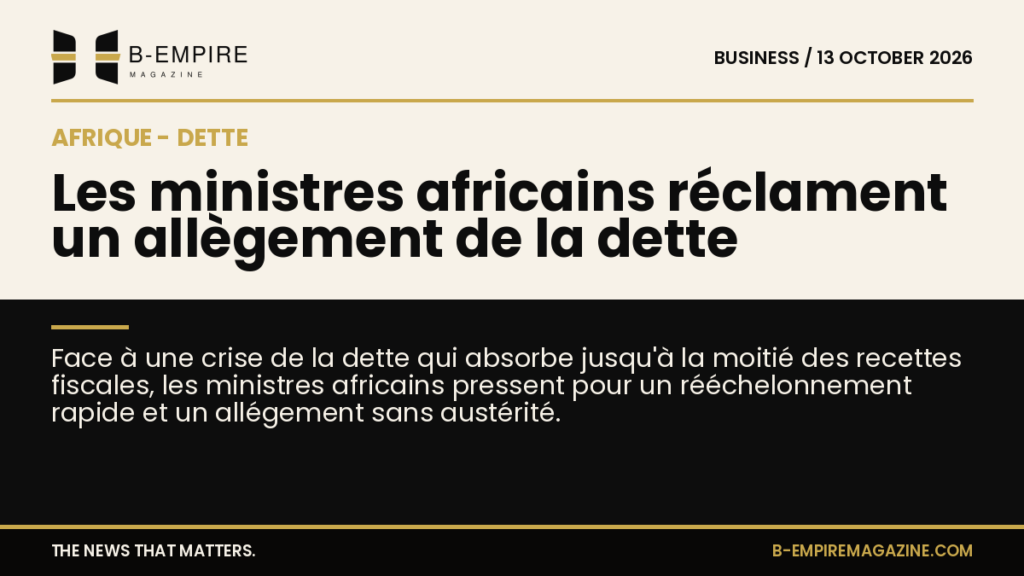
The IMF's upcoming World Economic Outlook report highlights a growing debt crisis in Africa, where debt servicing consumes up to half of tax revenues. While the IMF urges fiscal discipline, African finance ministers call for faster debt restructuring and relief to avoid worsening social unrest.
Brève Publié le (Africa/Lagos, UTC+1)
The International Monetary Fund’s forthcoming World Economic Outlook report, to be released in Bangkok on Tuesday, underscores a deepening debt crisis across Africa despite stable growth forecasts.
While the IMF projects sub-Saharan Africa’s growth to remain above four percent, this masks a severe liquidity crunch. In several countries, debt repayments now consume between 30 and 50 percent of tax revenues, diverting funds from essential public services such as healthcare, infrastructure, and education.
The IMF continues to recommend broadening tax bases, cutting unplanned subsidies, and rebuilding fiscal buffers. However, these austerity measures have sparked political unrest: Kenya witnessed deadly protests following tax hikes, Nigeria faced soaring food prices and nationwide strikes after currency devaluation and subsidy cuts, and households from Ghana to North Africa are increasingly vulnerable due to subsidy reductions.
In response, African finance ministers are demanding the G20 and multilateral lenders enforce a strict six-month timeline for debt restructuring under the Common Framework. They also seek suspension of IMF loan surcharges and meaningful debt relief without further austerity conditions.
The debate in Bangkok reflects a broader conflict over who should bear the cost of Africa’s debt crisis. While lenders emphasize fiscal discipline to restore market confidence, African leaders warn that insufficient debt relief risks pushing citizens into deeper hardship and fueling further unrest.