
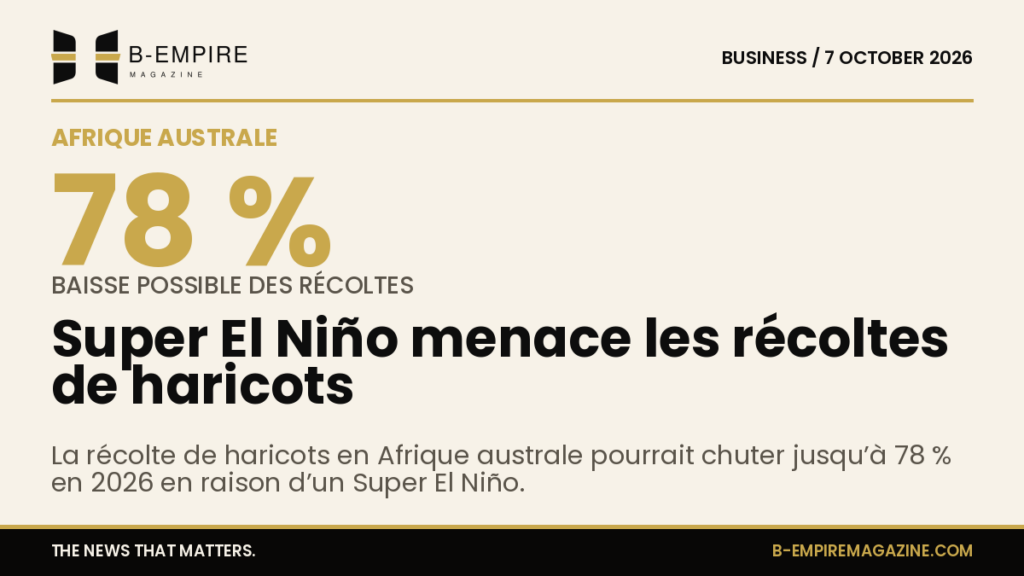
Super El Niño threatens to slash southern Africa’s bean harvests by up to 78%
A team of researchers led by agricultural expert Moses Chitete warns that the 2026 Super El Niño event could severely impact southern Africa's bean harvests, potentially reducing yields by up to 78%. Beans are a crucial staple and protein source in the region, but are highly sensitive to drought and heat. The anticipated extreme drought and high temperatures could devastate legume production, threatening food security and farmers' incomes. Experts urge early preparation with drought-tolerant crops, soil moisture conservation, and crop diversification to mitigate impacts.
Brève Publié le (Africa/Lagos, UTC+1)
The 2026 Super El Niño, expected to last from September 2026 into early 2027, poses a serious threat to southern Africa’s bean harvests, potentially cutting yields by up to 78%, according to agricultural researcher Moses Chitete and his team.
Beans, the most traded and consumed grain legume in southern Africa, are a primary staple and the second-most important dietary protein source in the region. However, they are highly sensitive to water stress and high temperatures, especially during flowering, pod formation, and grain filling stages.
Climate shocks such as droughts, floods, and erratic rainfall have historically reduced legume harvests drastically, undermining smallholder farmers’ livelihoods and food security. The Super El Niño event could bring severe drought and heat, exacerbating these risks.
Chitete emphasizes that farmers should not wait for severe drought conditions to act. Recommended measures include planting early-maturing and drought-tolerant legume varieties, conserving soil moisture, diversifying crops to reduce total losses, harvesting and storing water, and following seasonal climate advisories to adjust planting schedules.
These strategies aim to protect farmers and maintain food supplies amid increasingly frequent and severe climate shocks in southern Africa.