
7 ways South Africans can push for improved municipal planning ahead of local polls
As South Africa approaches its local government elections on 5 November 2026, experts highlight the critical need for voters to focus on urban planning, specifically the Spatial Development Framework, to address persistent issues like housing shortages and service delivery failures. Citizens are encouraged to hold municipalities accountable for planning decisions that shape where and how communities live and develop.
Brève Publié le (Africa/Lagos, UTC+1) · date de l'événement : 2026-11-05
South African voters are being urged to push for better urban planning ahead of the local government elections scheduled for 5 November 2026. According to research led by South Africa’s SARChI Chair for Inclusive Cities, spatial planning is a crucial but often overlooked function of local governments that determines where people live, work, and move.
While election campaigns commonly focus on fixing potholes, water outages, and power cuts, these issues stem from deeper planning decisions. Experts emphasize that residents should demand access to and enforcement of the Spatial Development Framework (SDF) in their municipalities. The SDF guides where development should occur and how infrastructure like roads and water services will support it.
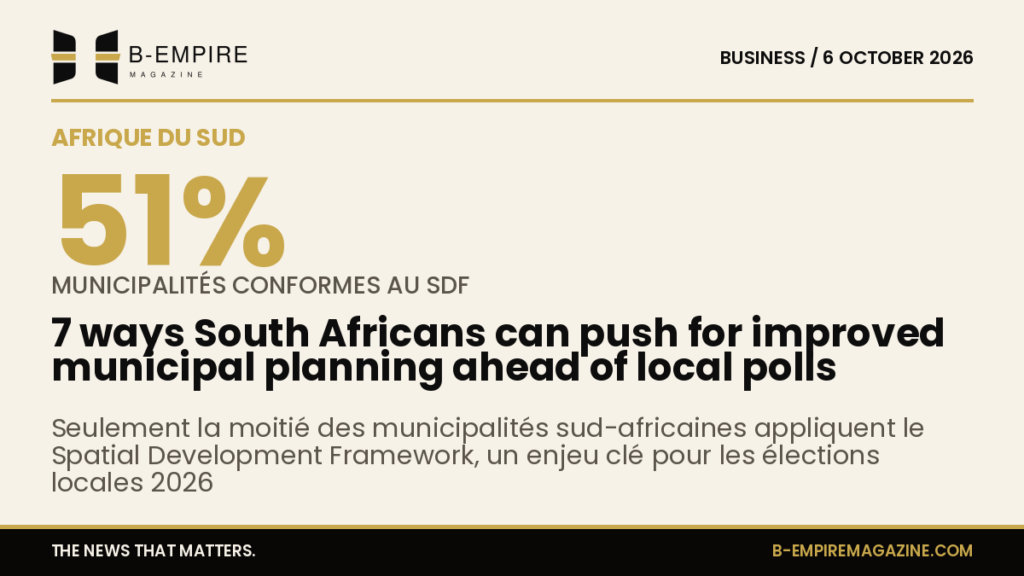
Currently, only 51% of South African municipalities comply with their own SDFs, leading to unchecked developments that strain services and exacerbate urban problems such as informal settlements and traffic congestion. By engaging with councillors and using existing laws and public meetings, residents can influence planning before crises arise.
This call to action highlights seven priority areas for public pressure, including scrutinizing municipal capacity alongside corruption concerns, to foster more inclusive and sustainable urban development. The approach aims to shift local governance from reactive service delivery to proactive spatial justice.