
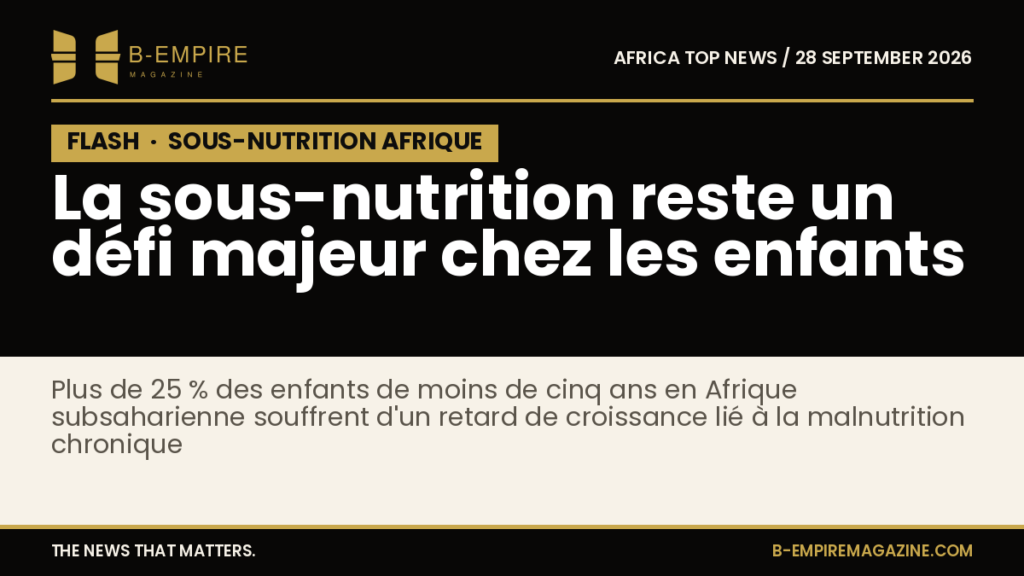
Undernutrition Remains a Major Challenge for Children Under Five in Sub-Saharan Africa
A review of 50 studies from 2015 to 2025 highlights that undernutrition, particularly stunting, wasting, and underweight, remains a predominant form of child malnutrition in sub-Saharan Africa. The research emphasizes that malnutrition is driven by multiple factors beyond food scarcity, including disease, poor sanitation, climate pressures, healthcare access, and socio-cultural influences. Effective solutions must integrate nutrition support with broader social, economic, and environmental actions.
Brève Publié le (Africa/Lagos, UTC+1)
Undernutrition remains a major health challenge for children under five in sub-Saharan Africa, according to a review of 50 studies published between 2015 and 2025.
The review, focusing on child malnutrition across the region, found that stunting—where children are too short for their age due to long-term nutritional deprivation—is the most common form of malnutrition. In many countries, including Tanzania, Uganda, Ethiopia, Liberia, and the Central African Republic, over 25% of children under five are stunted.
Other forms of undernutrition such as wasting and underweight are also widespread. Approximately 20% of children under five in 12 sub-Saharan African countries were underweight. While nutrition programs have helped reduce underweight rates, factors like illness, poor diet, unsafe water, poverty, and limited maternal education continue to increase risks.
The research highlights that malnutrition is a complex issue not caused solely by food shortage. Disease, poor sanitation, climate pressures, limited healthcare access, caregiver knowledge gaps, and socio-cultural behaviors also play significant roles.
Experts stress that lasting solutions require combining nutrition support with broader actions addressing poverty, food systems, health services, and community needs to effectively combat child malnutrition in the region.