
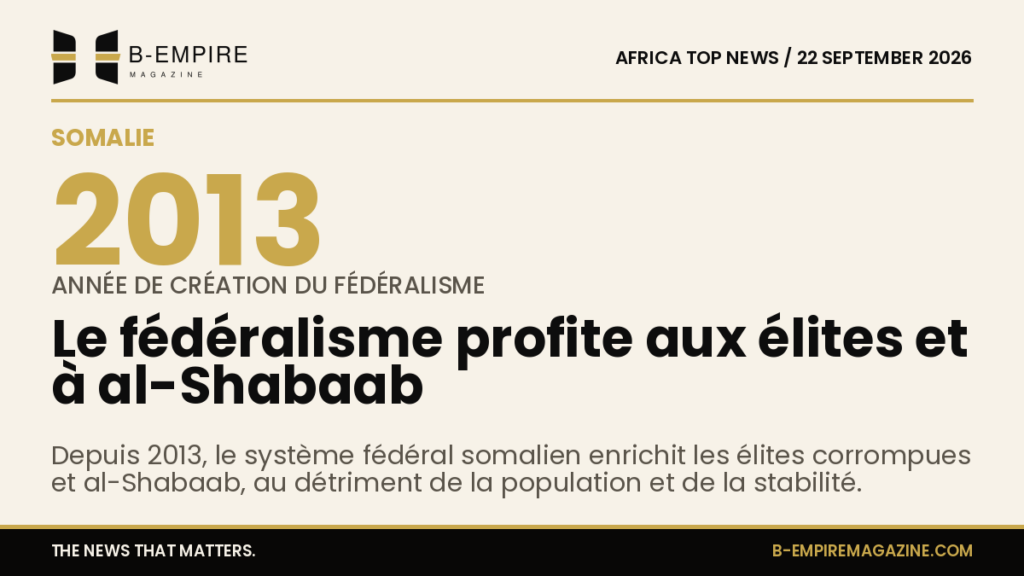
Somalia’s federal system enriches elites and al-Shabaab, leaving public behind
Since the establishment of Somalia's federal government in 2013, political elites at federal and state levels have profited from corruption linked to international aid and control over transport chokepoints. Meanwhile, al-Shabaab remains entrenched, taxing and regulating trade. This situation benefits elites and militants but fails the Somali population, perpetuating conflict and instability.
Brève Publié le (Africa/Lagos, UTC+1) · date de l'événement : 2013-08-20
Somalia’s federal government, formed in 2013 after prolonged conflict, has largely benefited political elites and the militant group al-Shabaab, while failing to improve conditions for the majority of its people, according to research from the London School of Economics.
The federal government has limited authority and is marred by corruption among elites at both federal and member state levels. These elites profit from international aid mismanagement and from controlling key transport chokepoints such as seaports and road checkpoints that regulate movement of goods and people.
Al-Shabaab remains deeply entrenched in Somalia, taxing and regulating trade across the country, effectively positioning itself as an alternative authority to the official government.
The international community’s efforts in counterterrorism, migration control, development, and humanitarian aid have not significantly altered this dynamic, which continues to exploit displaced populations and sustain political instability.